Khalid Ballouli looks at lives of aspiring young ballplayers, which he used to be
Posted on: June 28, 2022; Updated on: June 28, 2022
By Page Ivey, pivey@mailbox.sc.edu, 803-917-5882
Khalid Ballouli knows first-hand what life is like for an aspiring professional ballplayer. It was his personal experience, which included six years as a pitcher in the minor leagues after playing for the Southeastern Conference’s Texas A&M University, that led him to his 10-year research project interviewing young players and their families about their experiences in travel baseball.
“For me, growing up in a competitive youth sport environment was difficult financially for my parents,” Ballouli says. “It was also difficult for my siblings because a lot of time and money were committed to my progress. Most family vacations were built around where and when my baseball tournaments were held.”
After his playing days, Ballouli continued to coach while he went back to school, at Texas A&M University earning his Ph.D. in sport management. While his primary research field is marketing and sport consumer behavior, the notion of tracking a group of pre-teen athletes through their high school and college years called to him, in part, because he wanted to help them set realistic expectations for their future and prepare them for some of the experiences he had while playing,
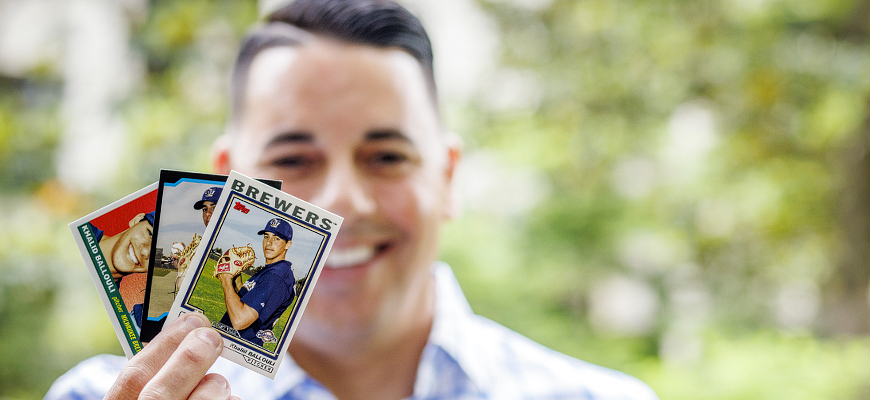
“I spent a lot of my time coaching these players and these parents to temper their expectations,” Ballouli says. “Even though I was able to experience a rare success story — I got a scholarship to an SEC school, I was drafted and played professionally, I have several baseball cards — I still ended up 28 years old when I retired, not knowing what the next step was in my life, even having all that success.”
Ballouli says one of the biggest issues for highly competitive players is the loss of friendships for both the youngsters and their parents as some players continue to the next level in sport while the majority of others don’t.
“I tried to coach the players and their parents to make sure that they don't miss out on the character-shaping moments, family-bonding experiences, and life-long friendships that baseball can provide when done the right way,” he says.
“Through my own experience, I noticed that a lot of the decisions that were made for me and by my family cost them a lot of social capital among different social, school, and baseball communities. That's the impetus of the study really, to show that while there's a lot of good that comes from competitive youth sport, there's also a lot of bad that comes from it as well.”
For the study, Ballouli found a single team of 13 ballplayers all at one baseball academy in Texas. In the beginning, all had high hopes of riding their talents to a Division I university and possibly a pro career. A few years in, as the players were turning 15, it became clear some of the major sacrifices these young men were making as they strived towards these goals.
I tell parents: ‘Look, I went the distance and have baseball cards to show for it. But you didn’t know me until today. No one stops me for my autograph. I don't have millions of dollars in the bank. You need to have a Plan B in mind for you son, because Plan B is the odds-on favorite.’
Khalid Ballouli
Some of the boys told researchers they knew they were starting to experience an early decline in their passion or motivation for the game. Others even reflected on not necessarily wanting to play in college beyond high school. They worried what their parents would say if they asked to quit after so much energy and resources had been put into this dream of professional baseball.
“That was really gut-wrenching to hear the boys talk about,” Ballouli says.
Of the players in his study, which is wrapping up its final interviews as the young men turn 22, only one was drafted and is playing for a Colorado Rockies minor league team. Ten of the boys played baseball on scholarship in college — eight of those for Division I schools. Three boys’ playing careers ended with high school, but they went to college at Texas A&M University and Rice University.
“When we interviewed them at 18, they really took that hard,” Ballouli says of the boys who did not play in college, while watching teammates continue to play — even if it was at smaller junior colleges that may not have had the same academic reputations as Texas A&M or Rice.
“When we interview them now, I think it's sunk in that their other former teammates have stopped playing as well. I think they understand the long-tail better and prefer the position that they're in.”
Those young men, he says, realize that not getting to play in college may have been the best disappointment of their lives. But there was no way to tell them — or their parents — when the boys were 18 or 15 or 12 years old.
“It's romantic to think about the idea that a son or daughter can be one of the few success stories,” Ballouli says. “But the reality is there’s risk and luck that play into it, much like playing the lottery. The chances of a realizing the dream of are quite slim.
“At least with the lottery, you know what you're getting, and the money at least is life-changing. I don't know how life-changing being a professional athlete or a Division I athlete really is. Even for these select athletes, life typically goes on outside of baseball in their late-twenties. Every player I’ve known that’s faced this hard reality has had to ask himself — was it all worth it?”
Ballouli says he tries to use his own experience — and hopefully his research will reinforce it — when he meets young players and their parents to help them temper their expectations and build a formula that allows for humility and perspective alongside athletic and sport training.
“I tell parents: ‘Look, I went the distance and have baseball cards to show for it. But you didn’t know me until today. No one stops me for my autograph. I don't have millions of dollars in the bank. You need to have a Plan B in mind for you son, because Plan B is the odds-on favorite.’”
Share this Story! Let friends in your social network know what you are reading about
Members of the public sector, private sector, and academia convened for the second AI Policy Forum Symposium last month to explore critical directions and questions posed by artificial intelligence in our economies and societies.
The virtual event, hosted by the AI Policy Forum (AIPF) — an undertaking by the MIT Schwarzman College of Computing to bridge high-level principles of AI policy with the practices and trade-offs of governing — brought together an array of distinguished panelists to delve into four cross-cutting topics: law, auditing, health care, and mobility.
In the last year there have been substantial changes in the regulatory and policy landscape around AI in several countries — most notably in Europe with the development of the European Union Artificial Intelligence Act, the first attempt by a major regulator to propose a law on artificial intelligence. In the United States, the National AI Initiative Act of 2020, which became law in January 2021, is providing a coordinated program across federal government to accelerate AI research and application for economic prosperity and security gains. Finally, China recently advanced several new regulations of its own.
Each of these developments represents a different approach to legislating AI, but what makes a good AI law? And when should AI legislation be based on binding rules with penalties versus establishing voluntary guidelines?
Jonathan Zittrain, professor of international law at Harvard Law School and director of the Berkman Klein Center for Internet and Society, says the self-regulatory approach taken during the expansion of the internet had its limitations with companies struggling to balance their interests with those of their industry and the public.
“One lesson might be that actually having representative government take an active role early on is a good idea,” he says. “It’s just that they’re challenged by the fact that there appears to be two phases in this environment of regulation. One, too early to tell, and two, too late to do anything about it. In AI I think a lot of people would say we’re still in the ‘too early to tell’ stage but given that there’s no middle zone before it’s too late, it might still call for some regulation.”
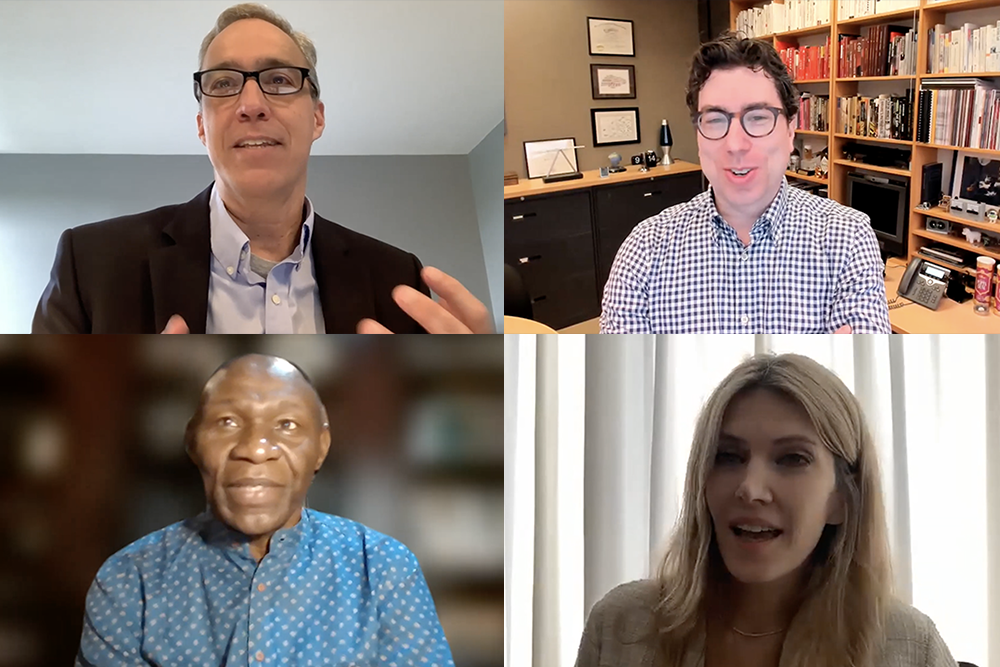
A theme that came up repeatedly throughout the first panel on AI laws — a conversation moderated by Dan Huttenlocher, dean of the MIT Schwarzman College of Computing and chair of the AI Policy Forum — was the notion of trust. “If you told me the truth consistently, I would say you are an honest person. If AI could provide something similar, something that I can say is consistent and is the same, then I would say it's trusted AI,” says Bitange Ndemo, professor of entrepreneurship at the University of Nairobi and the former permanent secretary of Kenya’s Ministry of Information and Communication.
Eva Kaili, vice president of the European Parliament, adds that “In Europe, whenever you use something, like any medication, you know that it has been checked. You know you can trust it. You know the controls are there. We have to achieve the same with AI.” Kalli further stresses that building trust in AI systems will not only lead to people using more applications in a safe manner, but that AI itself will reap benefits as greater amounts of data will be generated as a result.
The rapidly increasing applicability of AI across fields has prompted the need to address both the opportunities and challenges of emerging technologies and the impact they have on social and ethical issues such as privacy, fairness, bias, transparency, and accountability. In health care, for example, new techniques in machine learning have shown enormous promise for improving quality and efficiency, but questions of equity, data access and privacy, safety and reliability, and immunology and global health surveillance remain at large.
MIT’s Marzyeh Ghassemi, an assistant professor in the Department of Electrical Engineering and Computer Science and the Institute for Medical Engineering and Science, and David Sontag, an associate professor of electrical engineering and computer science, collaborated with Ziad Obermeyer, an associate professor of health policy and management at the University of California Berkeley School of Public Health, to organize AIPF Health Wide Reach, a series of sessions to discuss issues of data sharing and privacy in clinical AI. The organizers assembled experts devoted to AI, policy, and health from around the world with the goal of understanding what can be done to decrease barriers to access to high-quality health data to advance more innovative, robust, and inclusive research results while being respectful of patient privacy.
Over the course of the series, members of the group presented on a topic of expertise and were tasked with proposing concrete policy approaches to the challenge discussed. Drawing on these wide-ranging conversations, participants unveiled their findings during the symposium, covering nonprofit and government success stories and limited access models; upside demonstrations; legal frameworks, regulation, and funding; technical approaches to privacy; and infrastructure and data sharing. The group then discussed some of their recommendations that are summarized in a report that will be released soon.
One of the findings calls for the need to make more data available for research use. Recommendations that stem from this finding include updating regulations to promote data sharing to enable easier access to safe harbors such as the Health Insurance Portability and Accountability Act (HIPAA) has for de-identification, as well as expanding funding for private health institutions to curate datasets, amongst others. Another finding, to remove barriers to data for researchers, supports a recommendation to decrease obstacles to research and development on federally created health data. “If this is data that should be accessible because it's funded by some federal entity, we should easily establish the steps that are going to be part of gaining access to that so that it's a more inclusive and equitable set of research opportunities for all,” says Ghassemi. The group also recommends taking a careful look at the ethical principles that govern data sharing. While there are already many principles proposed around this, Ghassemi says that “obviously you can't satisfy all levers or buttons at once, but we think that this is a trade-off that's very important to think through intelligently.”
In addition to law and health care, other facets of AI policy explored during the event included auditing and monitoring AI systems at scale, and the role AI plays in mobility and the range of technical, business, and policy challenges for autonomous vehicles in particular.
The AI Policy Forum Symposium was an effort to bring together communities of practice with the shared aim of designing the next chapter of AI. In his closing remarks, Aleksander Madry, the Cadence Designs Systems Professor of Computing at MIT and faculty co-lead of the AI Policy Forum, emphasized the importance of collaboration and the need for different communities to communicate with each other in order to truly make an impact in the AI policy space.
“The dream here is that we all can meet together — researchers, industry, policymakers, and other stakeholders — and really talk to each other, understand each other's concerns, and think together about solutions,” Madry said. “This is the mission of the AI Policy Forum and this is what we want to enable.”
The Jewish family can be considered the core of Jewish identity. At a four-day event, attendees can develop a rich understanding about the history and function of family in a Jewish context, according to organizers.
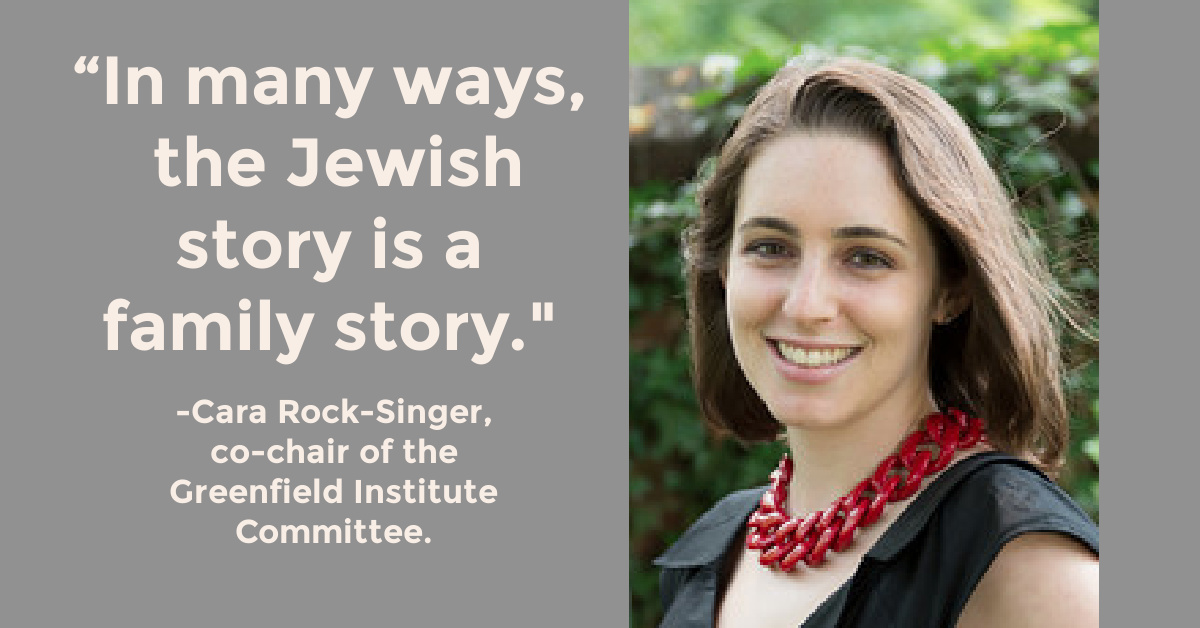
“In many ways, the Jewish story is a family story,” said Cara Rock-Singer, co-chair of the Greenfield Institute Committee. “There are so many different formations and meanings of family related to issues about how families function and work to produce and reproduce Jewish life.”
The 22nd annual Greenfield Summer Institute, which is part of the George L. Mosse and Laurence A. Weinstein Center for Jewish Studies at the University of Wisconsin-Madison, will be held July 11-14, 2022, featuring the theme of “The Jewish Family across Time and Place.”
The Institute was started by alum Larry Greenfield who wanted a way for alumni to extend their learning in Jewish history, culture and religion and to enjoy each other’s company every summer. Although he died some years ago, his wife Ros remains a generous supporter of the Greenfield Institute, according to Center for Jewish Studies Director Tony Michels.
Speakers include alumni, faculty and professors or experts in the field of Jewish study from across the country. This year, the theme of Jewish families was chosen due to the complexity and intricacies embedded in the topic.
“It’s such a multifaceted theme for us to really think about issues from depictions in media, to ritual practice, to new formations of family and new kinds of Jewish life,” Rock-Singer said. “It’s a really rich and capacious theme.”
From the narrative in Genesis about the formation of kinship to the development of the Jewish family into its role in the modern era, scholars will be speaking about their research and passions through in-depth lectures and events, according to organizers.
Rock-Singer is also an assistant professor of religious studies at UW-Madison. She will be giving a talk at the Institute about Jewish birth traditions.
“I’ll be talking about what we can learn about the nature of Jewish tradition from looking at Jewish birthing practices, in particular the stories of birth attendants, midwives and doulas,” Rock-Singer said. “I’ll also be speaking about what we can know about how Jewish people live, particularly Jewish women, through the stories of how they give birth.”
Other highlights of the event include a performance and lecture by academic and singer Galeet Dardashti about Persian Jewish music from her personal family tradition, and Annie Polland, the president of the Tenement Museum in New York City, who will be speaking about the expectations of Jewish mothers as studied through Yiddish cookbooks.
The fee to attend is $215, which includes some meals and access to each event. Lectures will be held at Grainger Hall, 975 University Avenue and is open to all community members and alumni.
* * *
What: Greenfield Summer Institute, “The Jewish Family across Time and Place”
[Warning: The following contains MAJOR spoilers for 90 Day Fiancé Season 9 Episode 11, “How to Marry a Stripper.”]
Though it’s not wrapped up in a neat little bow, Season 9 of 90 Day Fiancé is a weekly gift, a transcontinental reality soap opera to unwrap as a respite from actual relationships (or a lack thereof). Episode 11 is the first of the summer, and the show is definitely heating up! While we’re waiting for some “I dos,” here’s what’s happening with our seven couples.
Yve and Mohamed
After taking a breather from Yve and Mohamed inEpisode 10, we pick up their story with 73 days to wed. It hasn’t been going well, largely because Yve, a 48-year-old mother from Albuquerque, doesn’t want to convert to Islam. Being a Muslim is very important to Mohamed, who is 25 and moved to New Mexico from Egypt. He also supposedly gave Yve his virginity and is looking for someone to take care of him like his mother did.
Yve thinks it’d be good for them to go to the gym to release stress and reconnect romantically, but that turns out to be a very bad idea indeed. As they’re walking on tandem treadmills, she brings up the idea of having another baby. She has a son named Tharan, who is 12 and has special needs.
“Yve was raised with too much freedom,” Mohamed says in an interview. “I don’t think she is going to be a good behavior for my child.”
Mohamed doesn’t seem to allow for the possibility that he may end up with a daughter. He tells Yve he will take his child to the mosque with him, and he plans to teach him about Islam until he is old enough to decide for himself.
“My child, you can’t get him confused about his religion,” Mohamed says to Yve. “If my child will not be a Muslim, I prefer not to have a child.”
Yve looks like she needs several hugs, so let’s all send her some telepathically.
Emily and Kobe
TLC
With 27 days to wed, Emily and Kobe finally go shopping for a bed that will be big enough for the couple and their son to all sleep in together. Kobe has been relegated to a separate bedroom, and he’s thrilled that this is going to change soon.
Kobe goes ring shopping with Emily’s father David and sister Madeline — he’s still unaware that Emily bought herself a backup diamond ring just in case he failed to upgrade the ring he bought her on the street in China. Kobe came to the United States with $4,000, and he decides to spend more than a quarter of it on the new ring.
“You can change somebody’s life in Cameroon for that,” he says of the money.
Kobe takes Emily to a sushi bar slash steakhouse and has the server put the ring in a glass of champagne. Emily is thrilled with the new ring and doesn’t say anything about the backup one. They both agree that they’re going to have sex all night long.
However, that’s not to be after Emily confesses to Kobe in front of her parents that she bought a ring, whipping out the box. Kobe is deeply hurt and won’t open the box. Instead, he hands it to Emily’s father and goes to bed alone.
Jibri and Miona
TLC
Cheyne, Jibri’s badass lesbian grandmother, comes over for dinner. Jibri’s mom Mahala tells her mother-in-law that she’s concerned about Jibri and Miona getting married, and Cheyne jokes that there shouldn’t be any knives on the table.
As soon as the family sits down to eat, Mahala stirs the invisible pot, and Jibri expresses his frustration that Miona won’t budge on her dream of having a beach wedding, which is something they can’t do in South Dakota. Jibri calls Miona an “entitled millennial” who wants everything instantly, straight out of the microwave. Miona looks sad, but keeps her composure — and her perfect makeup stays intact.
Kara and Guillermo
Episode 11 is a sad one for Kara and Guillermo, but some tough family circumstances allow us to have a glimpse inside how close they actually are as a couple. With just 35 days to wed, Guillermo shares that one of his brothers in the Dominican Republic, José Joaquin, has renal failure and that it would be one of the worst things imaginable if he dies.
Unfortunately, Guillermo later receives a call at 4 a.m. informing him that José Joaquin has passed away. After weeks of being seen as controlling, we see Kara’s softer side kick in as she consoles Guillermo in his grief. Maybe this couple has more of a chance than we thought?
Bilal and Shaeeda
TLC
As they prepare to leave Bilal’s sister Nefertari’s house in Atlanta, Shaeeda is still preoccupied with the prenup that Bilal sprung on her while on the Ferris wheel. After FaceTiming with her family, she asks Bilal for a clause to be added to the prenup stating that they need to have kids before she turns 40. He asks what she’s talking about and scolds her for zipping up his Louis Vuitton luggage too hard.
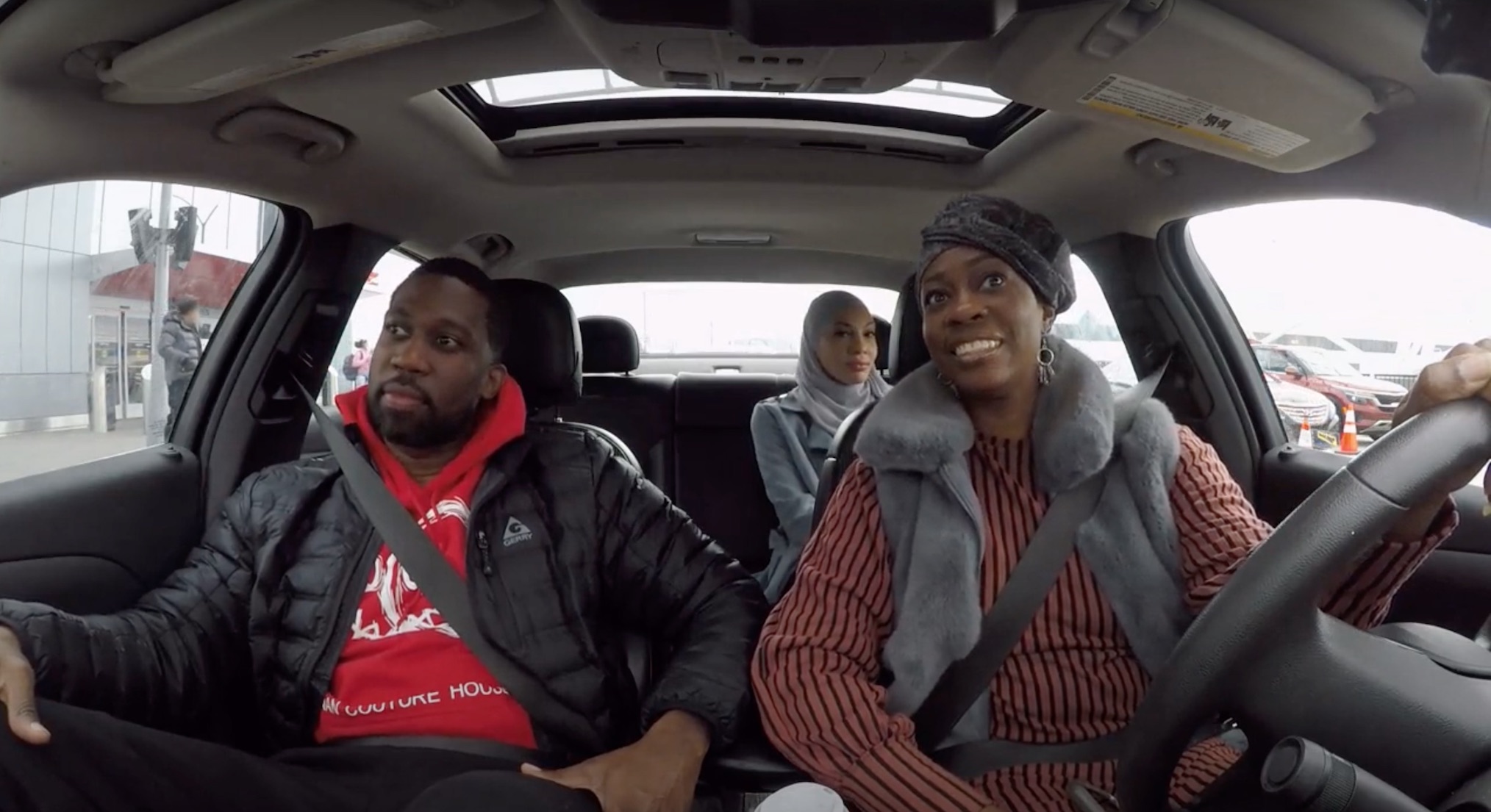
It’s a quiet ride to the airport, and Nefertari tries to break the ice between the couple and offers her best wishes for them to get along. Once they arrive at the airport, Bilal walks in front of Shaeeda and doesn’t look back. Shaeeda says in an interview that she expected a fairytale romance and the American dream.
“It hurts me to say this, but I’m not sure anymore,” she adds.
Ariela and Biniyam
TLC
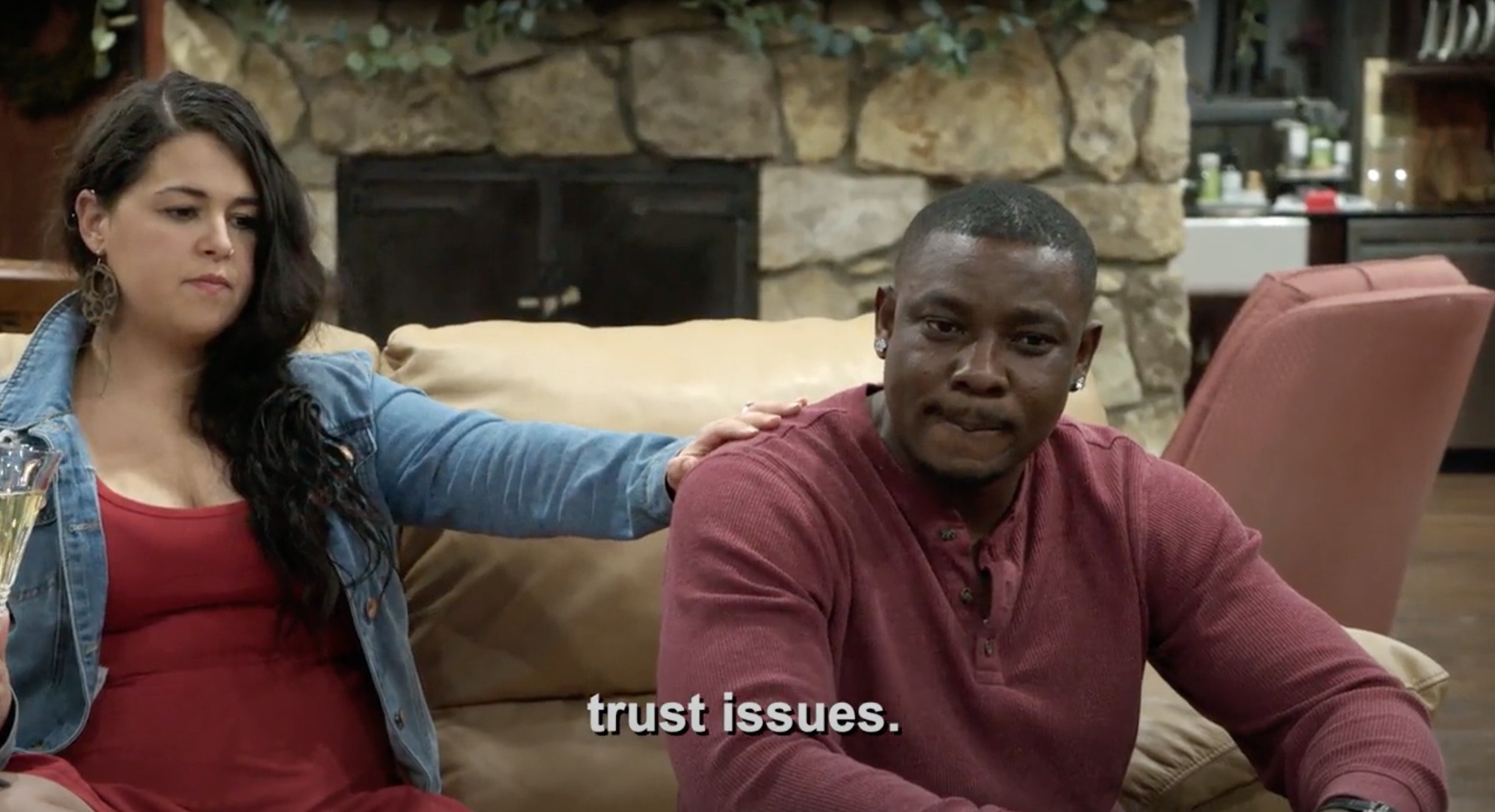
Leandro, Ari’s chummy ex to whom she was married for 10 years, pays the family a visit and resurfaces Bini’s well-established distrust for him. During an Ethiopian New Year’s Eve dinner, Bini feeds Leandro a celebratory tradition back home, with a bite that is way too big.
Ari invites Leandro to come wedding dress shopping with her, which immediately bugs Bini, who doesn’t know that it’s American tradition for the groom-to-be to stay home. Ari’s mom Janice revels in Bini’s discomfort and tells him that Leandro will pick out the wedding bra. Bini seethes in an interview that he wants Leandro out of his life.
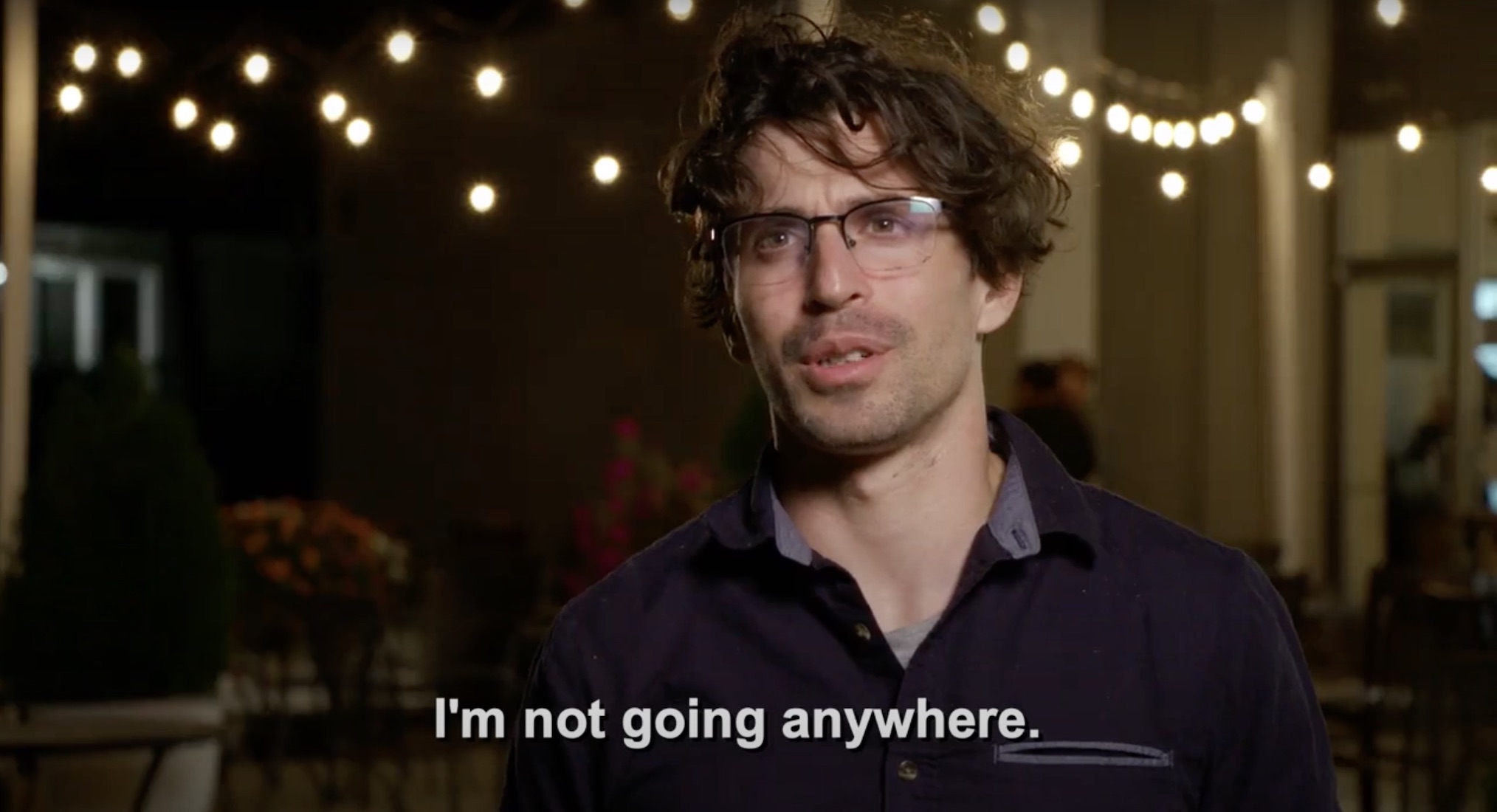
“I’m not going anywhere,” Leandro says smugly in a separate solo interview that he’s clearly relishing.
Patrick and Thais
TLC
With 48 days to go before they must get married or Thais has to return to Brazil, Patrick surprises Thais with a trip to Las Vegas, and we learn that he grew up in Sin City. They meet up with Patrick’s brother Matthew and his husband Carlos. Thais casually informs everyone at the table that her father doesn’t know she’s going to get married, which completely stuns Patrick.
In the car, Patrick tells Thais that she needs to let her father know that they’re getting married before they do it. She says she’ll tell him after and that it’s her choice. He says that he won’t let it go. Thais FaceTimes her father from the hotel room and shows off the view, but decides not to ask his permission to get married.
Later, Thais asks Patrick to drive them to a mystery spot, which turns out to be a quickie wedding chapel.
“This is how you marry a stripper,” he tells her, declining her offer to get hitched and call her father right there and then. “You deserve better.”
“I thought this was the best way to make everyone happy,” Thais says in an interview, “but now, I don’t know what to do.”
Next Time
Shaeeda finally sits down with Bilal’s ex-wife, Shahidah, who wants to talk about that prenup. Yve tells Mohamed that they must push their wedding date back, which prompts him to say, “Are you kidding me? I want my green card!”
Meanwhile, Patrick’s brother John argues with Thais, who’s still not telling her father that she’s getting married. Ari takes a pregnancy test under the watchful eye of her ex-husband, and Jibri and Miona argue in matching sweaters. Again?
With just over a month left to get married for most of the couples, crunch time is coming — and some relationships may get chewed up. Stay tuned!
90 Day Fiancé, Sundays, 8/7c, TLC (Streaming, discovery+)
Almost half the seats in the Honolulu City Council — four out of the nine council positions — are up for grabs this year in an election that will directly affect hundreds of thousands of voters on Oahu.
Members of the island’s neighborhood boards, unpaid voluntary civic organizations that represent the interests of local communities, are watching warily to see who will win the coveted slots.
In interviews conducted over the past week, members of the approximately 20 boards that will be most directly affected by the political turnover shared their hopes and fears about the pending transition to a new roster.
Neighborhood boards reflect the political grassroots on Oahu. In 2019, residents converged at a meeting of the Waimanalo Neighborhood Board to oppose a city-funded sports complex at a popular beachpark. Ku'u Kauanoe/Civil Beat/2019
Demanding Change
“We’re going to get a brand-new council person,” said Danielle Bass, chairman of the Mililani/Waipio Neighborhood Board, a community that is struggling with homelessness and high housing costs and is looking for inspired leadership. “There’s going to be a learning curve, obviously.”
Stephen Wood, chairman of the Aiea Neighborhood Board, feels slighted. Though the Aiea community is navigating major changes, including construction of a new jail and stadium within its borders, both massive projects, Wood worries that Aiea is being overlooked by the candidates.
“Out of all the candidates, no one has reached out to us,” he said.
In addition, each neighborhood also has its own particular set of challenges.
The erosion on heavily traveled Kamehameha Highway is a constant worry for Dotty Kelly-Paddock, a member of the Koolauloa board, but she sees little will to make permanent fixes. Kalihi Valley residents want a permanent extension of the restricted parking zone that they say proved such a success as a pilot program in the past but that city transportation officials have not embraced and allowed to continue.
Koolauloa residents worry about beach erosion on Kamehameha Highway and are hoping for long-term fixes to the problem. Ku‘u Kauanoe/Civil Beat/2021
Crowded Primary Races
The North Shore wants tighter land-use regulation enforcement and more police; in Makiki, residents are asking for a crackdown on people running stop signs. Both requests would require additional city staffing. In the Diamond Head area, a dispute over the ownership and use of Leahi Avenue has brought neighbors to the boiling point. They want action, fast.
These are the kinds of issues that typically end up before the City Council. Council members have more direct power over the island’s residents than state legislators because they oversee many of the agencies that provide direct service to the community.
Consequently, when controversial issues at last reach the halls of government, it makes a big difference who is sitting in the chairs at Honolulu Hale.
Nobody is more aware of that nexus of power than the volunteers who serve on the city’s 33 neighborhood boards, the city’s political grassroots, where ordinary residents often turn first for help when problems erupt.
The boards seek to address concerns by reaching out at their monthly meetings to council members who attend regularly and hope that the council member has the power to help or make changes and is akamai enough to figure out how to get things done.
The mayor’s office is ultimately the place where most decisions are made about how to handle controversial issues, but the council still has a powerful voice.
Of the nine council seats, three are open seats this year — Districts 2, 6 and 8 — and will be on the Aug. 13 primary ballot. In District 4, incumbent Tommy Waters faces a single challenger so by law that race will only appear on the general election ballot in November.
According to the Office of the City Clerk of the Elections Division, approximately 262,000 voters are constituents for these seats, or about 47% of an estimated electorate of about 560,600 voters on Oahu.
“If you are a board member for a while, you have a front-row seat on issues in the community.” — Lloyd Yonenaka of the Neighborhood Commission Office
District 2 stretches north from Wahiawa to the North Shore to Kahaluu; District 4 sweeps the eastern end of the island, from Hawaii Kai to Waikiki; District 6 is an urban hub north of downtown that includes Nuuanu/Punchbowl, Makiki and Chinatown; and District 8 is clustered around growing communities in the center of the island such as Aiea, Pearl City and Mililani.
There’s also another wrinkle. Some council boundaries are changing because of reapportionment due to population shifts revealed by the 2020 census.
After the election, about 20 neighborhood boards will find themselves turning to someone new for help for residents who live within their boundaries. Some neighborhood boards’ territories will shift as well, although that is still in flux because the Honolulu Neighborhood Commission is still working on the map overlays that let it make the final boundary determinations.
Generally, however, it is believed that parts of District 8 will join District 9 and that some boards will have two or even three council members, some old and some new, to represent their interests. The two Mililani boards — Mililani Mauka and Mililani/Waipio — will be shifted into the same council district, represented by the District 8 council member, bringing them into the Pearl City orbit rather than in alignment with the North Shore.
Three of the four races feature relative newcomers vying against people who are much better known.
Only one incumbent is running for reelection — Tommy Waters, who was first elected to the District 4 post in 2019, will square off in the Nov. 8 general election against a sole challenger, Kaleo Nakoa, who serves on the Hawaii Kai neighborhood board.
Honolulu City Council chair Tommy Waters is the only incumbent running for reelection. Cory Lum/Civil Beat/2022
There’s a crowded primary field in District 2 to select a new council member to replace Heidi Tsuneyoshi, a Republican who is running for governor. The candidates vying for the seat include Racquel Achiu, Lupe Funaki, Makuakai Rothman, Chad Tsuneyoshi and Matt Weyer, according to the state elections board.
District 6 has eight candidates hoping to replace political stalwart Carol Fukunaga, who is term-limited and is instead running for the Democratic nomination for Senate District 11 against Makiki/Tantalus board president Ian Ross. The field for the council seat includes Tyler Dos Santos-Tam, Ikaika Hussey, Nalani Jenkins, Chance K. Naauao-Ota, Zachary B. Burd, Dennis Masaru Nakasato, Traci K. Toguchi and Chad Toshiro Wolke.
New Faces
Brandon Elefante, who has held the District 8 slot, is also moving on because of term limits. He is running for state Senate District 16. The five candidates hoping to replace him are Val Okimoto, Keone Simon, Ron Menor, Charmaine Doran and Dion Mesta.
The Aug. 13 primary will whittle the candidates down to two for each race — if no one candidate receives more than 50% of the vote — who will then face each other in the general election.
Many of the candidates running for office come from the ranks of the neighborhood boards.
Racquel Achiu, who serves on the North Shore neighborhood board, is running for the District 2 post. Matt Weyer, who is running against Achiu, serves on the board in Waipahu.
The same pattern is visible in District 6. Dos Santos-Tam, running for that district seat, was formerly a member of the Liliha/Puunui/Alewa Neighborhood Board, as was Wolke. Naauao-Ota is serving on the board now.
So many former and current board members are running for the same City Council seat that Wesley Fong, who chairs the board, said he just says “good luck, and good luck, and good luck” to each.
“They know all the grassroots issues,” he said. “They are not coming in cold.”
Service on a neighborhood board is useful because it provides prospective council members with a good grounding on how the city really works, said Lloyd Yonenaka, executive secretary of the Neighborhood Commission Office, which oversees the boards.
“If you are a board member for a while, you have a front-row seat on issues in the community,” Yonenaka said.
Bob Leinau, treasurer of the North Shore Neighborhood Board, is worried that some of the candidates are political neophytes.
“You can’t just get elected because it is a popularity contest,” he said. “Some of the people running may have good intentions, but they lack experience. You are supposed to know a lot.”
Silvia Koch, vice chair of the Wahiawa-Whitmore Village Neighborhood Board, also said she thinks some of the candidates are not fully prepared for the jump into the political ring.
“They really feel they are qualified and I want to laugh,” she said. “A legend in their own minds.”
Kelly-Paddock, who lives in Haaula, said she wants candidates with experience dealing with the problems they share with the North Shore.
“I prefer to go with someone with their boots muddy from being in the trenches dealing with the issues we have,” she said.
Waipahu’s future is at risk as the rail project progresses, said Richard Oshiro, who has been on the Waipahu Neighborhood Board since 1989. The rail is badly needed, he said, but recent changes to the plan have eliminated for now the parking structure commuters need to access it. He worries that dense development will come to Waipahu without the rail delivering enough capacity to help solve residents’ transportation problems.
Waipahu neighborhood board members are worried about the progress of rail, which has its operations center in their neighborhood. Cory Lum/Civil Beat/2021
“The City Council race is very important as to how these kinds of projects move forward,” Oshiro said. “If the council member is not of the same mind — providing a balance between affordable housing and the desires of the community,” then Waipahu could be adversely affected, he said.
Kathleen Pahinui, who chairs the North Shore board, said developers are getting away with buying agricultural land and subdividing it for home construction, and that residents are forgoing the necessary approvals and building un-permitted septic systems.
“There are too many people doing what they want to do,” she said. “People are flouting the land-use rules.”
Real estate development is deeply unpopular this year on the North Shore and Hawaii Kai.
“Whoever gets in is going to be scrutinized closely,” Pahinui said. “If we think they are in the pockets of the developers that won’t be good for them.”
Listening To The Community
In Hawaii Kai, “the community is pretty much up in arms,” over a high-end, dense senior citizen housing complex, said Herb Schreiner, a member of the Hawaii Kai board.
“We are looking for five council members to oppose it,” said Greg Knudsen, another Hawaii Kai board member.
Drivers who ignore stop signs and careen about the streets are becoming a major peeve in Makiki.
“People are operating like there’s no law,” said Sam Mitchell, a member of the Makiki/Lower Punchbowl board.
Rising crime is the biggest concern in the Ala Moana area, said Ryan Tam, chairman of the Ala Moana board. That’s true in Waikiki as well, in addition to homelessness.
“Aggressive, drug-induced, violent, screaming, nudity,” recounted Jeff Merz of the Waikiki neighborhood board, adding that this kind of behavior on the streets is souring people on visiting Hawaii’s premiere tourist destination.
May Mizuno, who chairs the Kalihi Valley neighborhood board, where the parking shortage has caused a crisis, said she just wants to feel that she is being heard.
“I’m hoping they will listen to the community, rather than just being a politician,” she said.
Many asked for a higher level of morality from elected officials.
“What do we want out of the city?” asked Rich Turbin, who has served on the Waialae-Kahala board for 41 years. “Honest people who don’t take bribes and don’t get indicted.”
Steven Melendrez, former chair of the Mililani Mauka board, said people crave ethical leaders who respond to their concerns.
“They really want honest government,” he said. “They want the people in office to speak for the people.”
Sign up for our FREE morning newsletter and face each day more informed.
06/24/2022 (International Christian Concern) Nigeria – The second annual International Religious Freedom Summit will run from June 28-30 in Washington, D.C. Among the topics discussed are China’s persecution of Uyghur Muslims, persecution of Rohingya Muslims in Burma, antisemitism in Europe, and the continual attacks on Christians in Nigeria.
The conference’s featured speakers will include U.S. Speaker of the House Nancy Pelosi, the U.S. Ambassador-at-Large for International Religious Freedom Rashad Hussain, former NBA player Enes Kanter Freedom, an outspoken critic of Uyghur Muslim persecution, U.S. Senator Marco Rubio, former U.S. Secretary of State Mike Pompeo and Paivi Rasanen, a Finnish evangelical Christian and member of parliament.
Nury Turkel, the newly appointed chair of the U.S. Committee on International Religious Freedom and a Uyghur Muslim, commented on the IRF Summit’s importance to the Washington Times and hoped that summit will help others view religious liberty as a problem of national security.“The international community has been repeatedly making the mistake — specifically policymakers and liberal democracies — to wait until the religious persecution, human rights abuses reach the level of a humanitarian crisis to act. I think that’s a wrong approach; it’s a very costly approach.”
Turkel continued, “I hope to use this platform in my official capacity to call on the policymakers to pay attention to some of the worst human rights abuses, religious persecution, namely in Nigeria and in India that should concern us and also the rise of antisemitism and Islamophobia in Europe, both [of which] have been ignored by European leaders.”
He also expressed concerns about the use of advanced technology by more than 80 countries worldwide for persecution against religious groups. “I think that the international community is dealing with a new type of religious persecution and genocide that has been quietly tested, developed and now is promoted by communist China, which is the use of technology for religious persecution, Today, more than 80 countries have either already adopted or are in the process of adopting Chinese surveillance technology techniques that are a threat to civil liberty, religious liberty, even democratic norms.”
USCIRF Commissioner Frank Wolf, a former member of Congress, stressed the importance of the IRF conference, saying “I think we’re in a worse situation than we’ve been for a long, long time. There is less activity, fewer and fewer people are interested in or concerned with religious freedom issues internationally.”
ICC, which will be attending the conference, has reported extensively on Christian persecution in Nigeria, with articles documenting the St. Francis Catholic Church attack, Fulani militant attacks, and abductions of priests around the country.
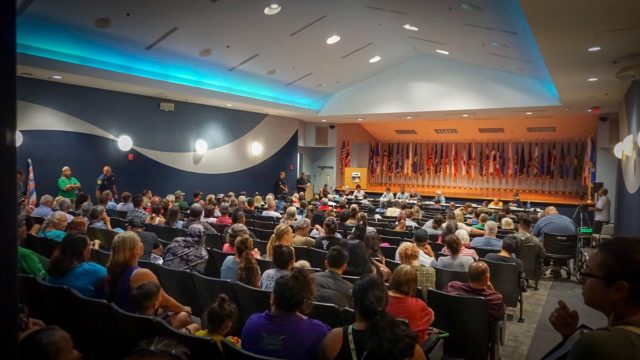
More than 130 people gathered together in the West Newton Cinema on June 15 to watch “All the Lonely People,” a documentary on loneliness and social isolation before and throughout the COVID-19 pandemic.
Newton’s Department of Senior Services, together with the Council on Aging, organized the screening to engage the city’s senior community and raise awareness of the topic, said director Jayne Colino.
Before the film began, Colino asked the audience whether it was their first time in a movie theater in two years.
Many in the crowd raised their hands.
“It is a topic that resonates,” Colino later said in an interview. “We help people every day who live in an isolated way every single day of their lives. So I really wanted the greater community to listen to what this topic is and how it might play out on a day-to-day basis.”
In March 2020, the US Center for Disease Control and Prevention urged adults 60 or older to stay at home and limit social interactions, as they were one of the groups most at risk for severe illness or death from COVID-19.
By that point, the effects of loneliness and social isolation on older adults was already a topic of conversation — over a third of US adults aged 45 and up reported feeling lonely in 2018, according to a surveyby the American Association of Retired Persons.
“A lot of people got wicked lonely these last two-and-a-half years,” said Newtonville resident Betsy Louise Simmons moments before the screening. “I feel like we all need each other, all ages.”
Recent research has noted how communities are important in addressing social isolation.
At the June 15 screening, Janet Seckel-Cerrotti, founder and executive director of Boston-based nonprofit FriendshipWorks, said her organization has a mission to reduce social isolation and increase the quality of life for older adults, adding it seeks to continue its partnership with Newton.
“We live a life of interdependence,” Seckel-Cerrotti said. “Most of us want to be there for someone else.”
The audience was lively, and at one point a teenager portrayed in the film spoke of her parents, describing them as “quite old, in their 50s.” The audience chuckled.
As a potential solution, the documentary highlighted “Happy to Chat” benches, which include a friendly sign on a bench inviting pedestrians to sit down and chat.
During a question-and-answer portion at the end of the event, an audience member said they would like to see the city bring these benches to Newton.
In response, Mayor Ruthanne Fuller asked the Cultural Development Office to look into making that happen, according to her spokesperson, Ellen Ishkanian.
The documentary provided several “life hacks” for coping with loneliness and social isolation, such as reaching out for support early, stepping out of one’s comfort zone, joining group-minded activities, and expressing gratitude.
Newton Upper Falls resident Emily Kaye said she resonated with a lot of scenes from the documentary, having felt “lonely and isolated” throughout the pandemic.
“It’s tragic, and I’m sad for other people and I’m sad for myself too,” Kaye said, adding that while she’s hesitant to believe many of the solutions presented in the film could be applied to her, she plans to put them into action nonetheless.
The screening was followed by an on-screen interview between Colino and the film’s producer, Joseph Applebaum, who video called from Atlanta.
Applebaum said he and the director of the film, Stu Maddux, hoped to reach communities “at a grassroots level,” through screenings at small independent theaters.
“That is where change is going to happen,” Applebaum said.
The June 15 screening was one of the largest audiences West Newton Cinema had seen since the start of the pandemic, said longtime owner David Bramante.
Applebaum said they decided on the documentary’s topic in 2019 after asking, via a survey, what audiences of their previous documentary believed was the next big, under-discussed issue, Applebaum said.
Respondents, more than 3,000 in all, Applebaum said, pointed to loneliness and isolation.
“We were shocked, we were absolutely shocked,” Applebaum said. “As we got into it, we realized, ‘Wow, this is big.’”
Wendy Haskell, a First Unitarian Universalist Society of Newton volunteer, said in an interview the screening provided a “collective community to discuss the issue.”
“I think we need more of these community conversations and a way to get elders in particular together to do this sharing,” Haskell said.
Cici Yu and Jesús Marrero Suárez can be reached at newtonreport@globe.com.
More than 130 people gathered in the West Newton Cinema June 15 to watch a documentary, “All the Lonely People.”Jesús Marrero Suárez
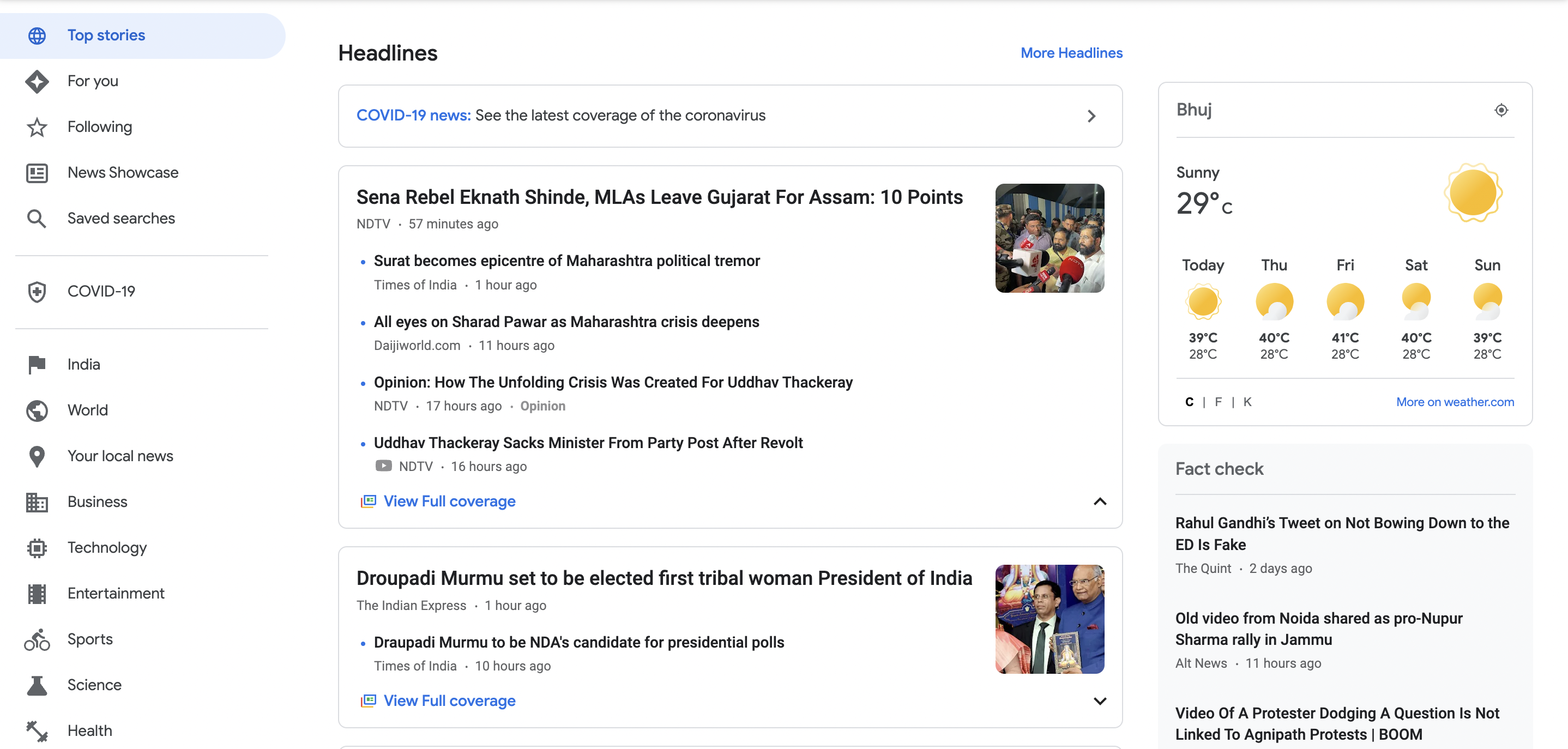
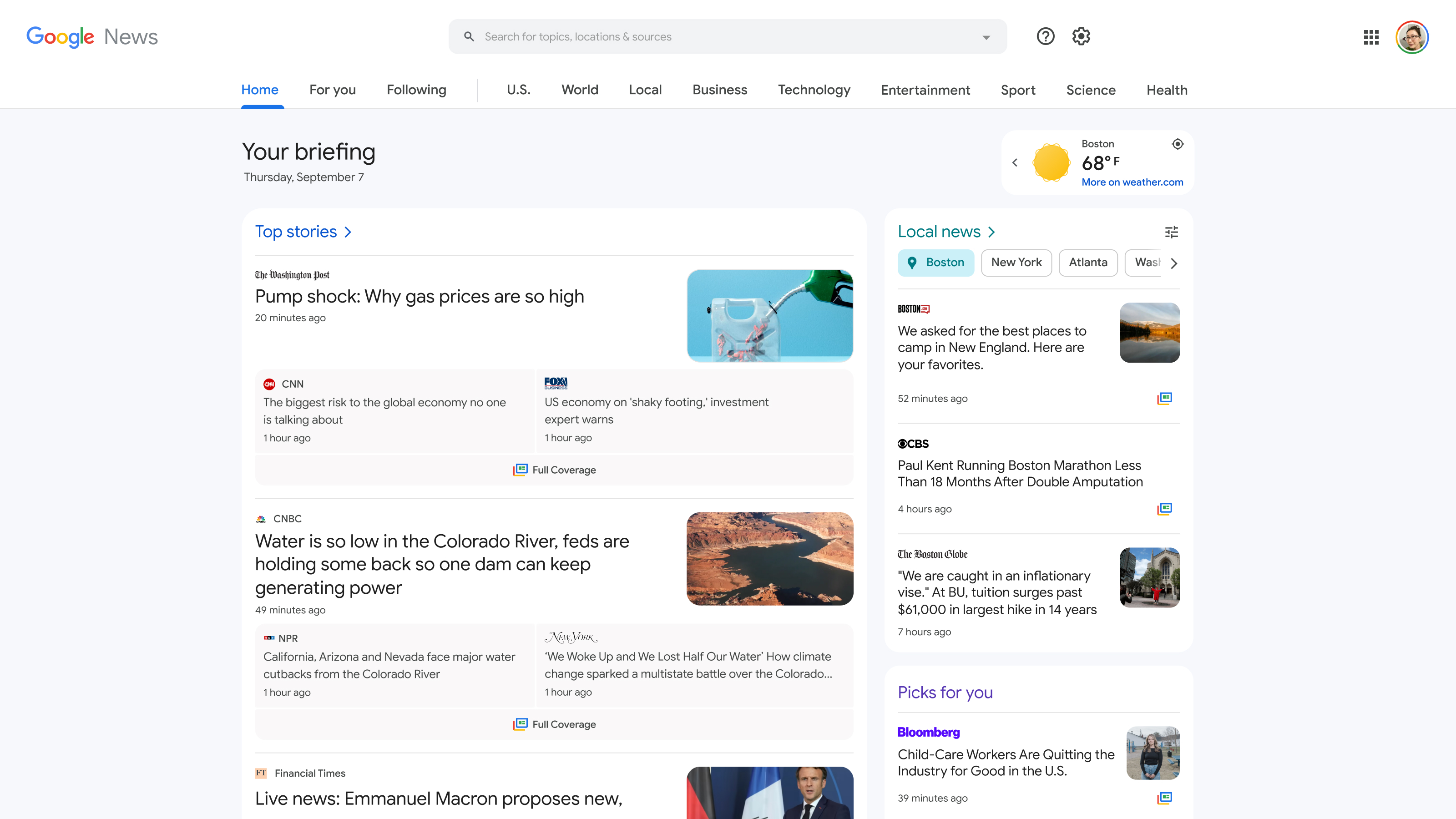
Google News is refreshing its desktop site with a new design that allows you to track global and local news on one screen. The redesign puts Your Briefing, Local news, and Top Picks section on a single page in different columns so it’s easier to catch up with news on topics and regions you care about.
Until now, if you logged on to Google News, you’d see the headlines section first, along with the weather widget on the side. Other sections like World, For You, and Local news were accessible by scrolling down or by clicking on these topics from the sidebar.
What Google News looks like in its old avatar
The redesign moves all topics from the sidebar to the top of the screen, to better accommodate other columns like Local news and Top picks. The weather widget now takes up a small space on the top right of the screen. Google has tried to replicate the feeling of reading a newspaper or a magazine — but through a desktop website.
“This change is just the latest way we’re bringing local news to users around the world. Last year, we expanded a feature on Google Search so readers around the world can now see a carousel of local news stories when Google finds local news coverage relevant to their query. This helps them easily find stories from local news publishers,” the company said in a statement.
The new look for Google News
What’s more, you can click on the customize button next to the Your topics section to select topics that you want to see on the home page, and even shuffle their order of appearance.
Image Credits: Google
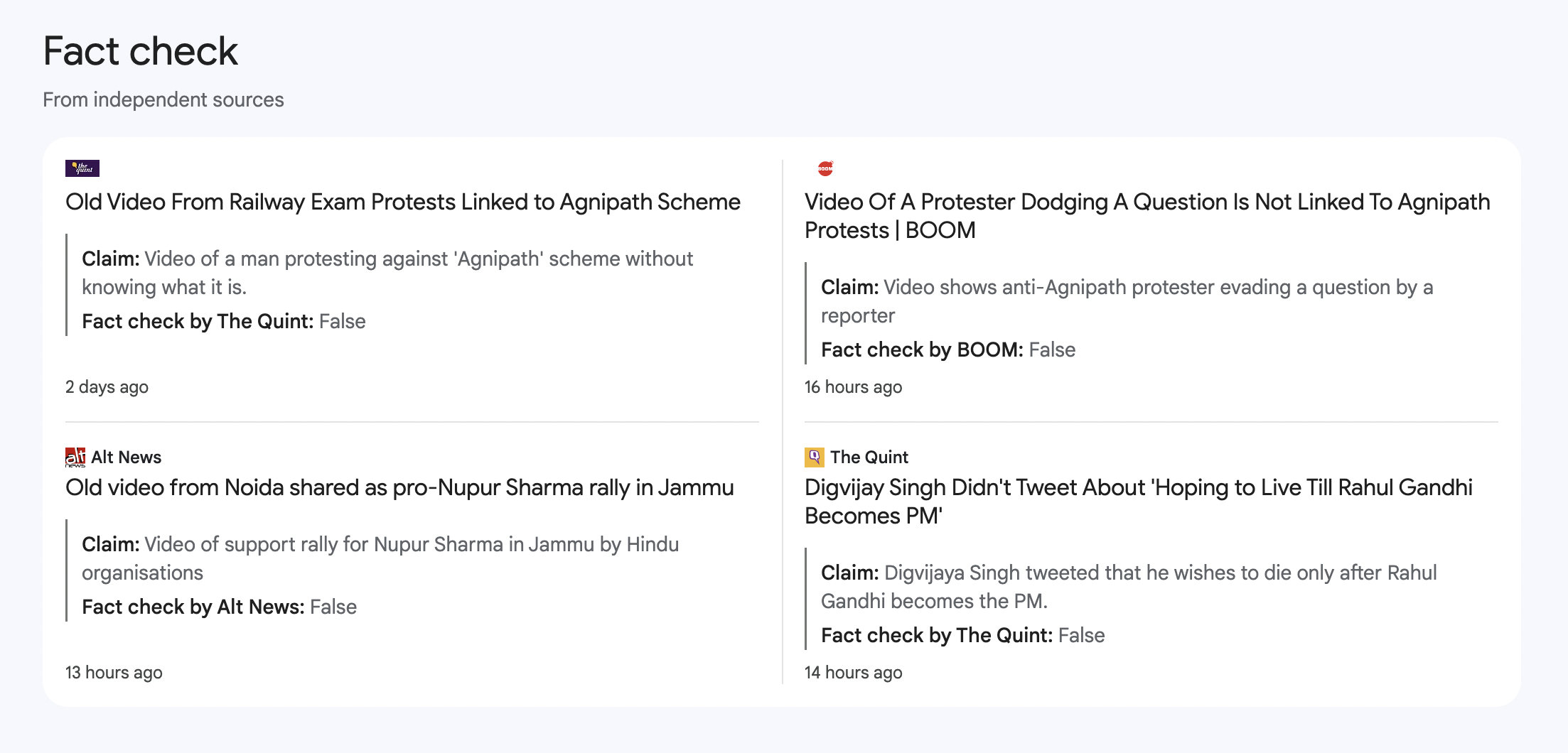
The redesigned Google News also features a revamped Fact Check section, which now also shows you the original claim and verified assessment for more context. Earlier this year, Google rolled out a new “highly cited” label in search to highlight the original source for a story.
The revamped Fact Check section, which provides more context
The company noted that along with these changes, Google News is returning to Spain after eight years, thanks to new copyright law. The firm claims that Google News is already present in 125 countries and 40 languages, and it drives 24 billion clicks to publishers’ websites every month.
Google said it’s opening up applications for its News Equity Fund, a grant for independent journalists or small news organizations to produce original stories. The firm will accept applications till July 21 from almost all countries across the world, except China and Russia.
The Company is Also Hosting a Party toCelebrate the GenZeroes Live-Action Series as well as the First Anniversary of its Flagship Studio, House of Kibaa, in New York City on June 22, 2022, during the time of the NFT.NYC Conference
VANCOUVER, BC, June 21, 2022 /CNW/ - Looking Glass Labs Ltd. ("LGL" or the "Company") (NEO: NFTX) (OTC: LGSLF) (FRA: H1N), a leading Web3 platform specializing in non-fungible token ("NFT") architecture, immersive metaverse environments, play-to-earn tokenization and virtual asset royalty streams, is pleased to announce that its Chief Executive Officer ("CEO"), Dorian Banks, is a confirmed speaker at the Collision 2022 Conference ("Collision" or the "Conference") on June 23 at 2:25 PM Eastern Time. Mr. Banks will be speaking on the topic of "When NFTs Meet Hollywood" with actor Bethany Brown and executive Donnie Dinch. The Conference is being held at the Enercare Centre in Toronto Ontario, from June 20-23, 2022. Also, the Company is hosting a celebratory social event (the "Party") to commemorate the launch of the GenZeroes live-action NFT-based series (the "GenZeroes Series") as well as the first year anniversary (the "Anniversary") of its wholly owned studio, House of Kibaa ("HoK"). The launch of the GenZeroes Series and the Anniversary are two significant milestones for the Company.
Known for being one of the most significant technology conferences in the world featuring over 600 speakers, Collision is an opportunity for companies, leaders and individuals to discuss the latest technologies and trends. Bethany Brown is part of the cast of the Company's live-action GenZeroes series, among other roles throughout her career. Born in Burnaby, BC, she has also starred in the series "The Astronauts" and has been involved in other television and movie productions.1Donnie Dinch is the co-founder and CEO of Bitski, a NFT and digital content company. He has over 10 years of experience in multiple fields including design, leadership, and innovation, and was featured in Forbes 30 Under 30 in 2014 in the music category for his previous company, WillCall.2
Collision is an occasion for companies and individuals to come together in Toronto to network, lead and learn. The Conference boasts many high-profile speakers including Lupita Nyong'o, an Academy Award-winning actress; Michele Romanow, Co-founder & CEO of Clearco; Ann Curry, journalist; and Carmelo Anthony, NBA All-Star and entrepreneur. The list of prominent and expert speakers further includes athletes, celebrities, CEOs, politicians, technology specialists, and many more over the course of the Conference with over 35,000 attendees. More information about Collision can be found on its website: https://collisionconf.com.
Separately, the Party in New York City is being held for holders of GenZeroes Series NFTs, stakeholders of the GenZeroes Series, the media, and other guests that have been formally invited. A number of GenZeroes actors are confirmed to be in attendance including, but not limited to, Aleks Paunovic, Bethany Brown, and Tahmoh Penikett. The Party will be held at the Nebula dance club located at 135 W 41St, New York, NY 10036. Nebula boasts three levels with a cutting-edge multimedia set-up that has previously attracted other technology and Web3 companies like LGL for special events.3 More information about HoK and the GenZeroes Series can be found on each of its websites, respectively: https://houseofkibaa.com and https://www.genzeroes.com.
The Party is taking place during the 4th Annual NFT.NYC industry event being held from June 20-23rd, across New York City. NFT.NYC is held for individuals, companies, brands, artists and other to collaborate and encourage further innovation in the world of NFTs. The Event will explore NFT-related art, brands, collectibles, data, fashion, films, investments, music, real estate, and so much more. Hosting the Party during the time of NFT.NYC will enable LGL to celebrate its accomplishments and build new relationships with the NFT community. More information about NFT.NYC can be found by visiting the following URL: https://www.nft.nyc.
Management Commentary
"I am honoured to be speaking at Collision this year. It will be a wonderful opportunity to not only share LGL's and HoK's stories and successes, but also to learn from the other speakers and attendees. I believe that everyone at the Conference will be there to help make the future better, through collaboration and innovation," said Dorian Banks, Chief Executive Officer of LGL. "We are also thrilled to be hosting the Party to commemorate LGL's milestones and share our successes with the NFT community. HoK and the GenZeroes Series are important to the Company. A lot of hard work, passion, persistence and creativity has been put into both HoK and the GenZeroes Series. We are proud to be where we are and we can't wait to celebrate this chapter while looking ahead to the future," added Mr. Banks.
ABOUT LOOKING GLASS LABS
Headquartered in Vancouver, British Columbia, Looking Glass Labs ("LGL") is a Web3 platform specializing in non-fungible token ("NFT") architecture, immersive metaverse environments, play-to-earn tokenization and virtual asset royalty streams. Its leading brand, House of Kibaa ("HoK"), designs and curates a next generation metaverse for 3D assets, which allows functional art and collectibles to exist simultaneously across different NFT blockchain environments. HoK has successfully released digital assets to include GenZeroes, which sold out in just 37 minutes for total proceeds to LGL of CAD 6.2 million, in addition to a perpetual 5% royalty stream on secondary market sales. HoK plans to launch a hyper-realistic metaverse built on the latest version of Unreal Engine in 2022.
This news release contains "forward-looking statements." Statements in this news release that are not purely historical are forward-looking statements and include any statements regarding beliefs, plans, expectations, or intentions regarding the future. Such forward-looking statements include, among other things: the development of the Project Origin metaverse, the Company's goal to become the leading digital studio specializing in NFT architecture, immersive metaverse design and virtual asset display monetization streams; intention to build out a portfolio of perpetual NFT royalty streams through collaborations, accretive acquisitions and other arrangements, to potentially result in consistent, de-risked and passive revenue; and the near-term projects and future projects.
The material assumptions supporting these forward-looking statements include, among others, that: the Company could mitigate the risks associated with the blockchain and NFT industry; the ability to compete with other businesses in the NFT market; the availability of sufficient funding to carry out the Company's business development plans; favourable market conditions; the ability of HoK to sell all or substantially all of its offerings; and the ability to complete the development of Overlords in a timely manner.
Although management considers these assumptions to be reasonable based on information currently available to it, they may prove to be incorrect. These forward-looking statements are only predictions and involve known and unknown risks, uncertainties and other factors, including: the continued growth and adoption of NFT and metaverse offerings by the consumer market; the cost of developing and designing NFTs and metaverses is economically viable; the Company being able to attract and retain a sufficient workforce with desired skillsets to develop the Company's NFT and metaverse offerings; the availability of offerings provided by third-parties in the NFT, metaverse development and online gaming market to identify potential transactions; the increasing adoption of NFTs as a solution for various online gaming, entertainment and collectible uses; the Company having the ability to mitigate the risks associated with the blockchain and NFT industry; and the ability to compete with other businesses in the NFT, metaverse development, content creation and collectibles market.
Although management considers these assumptions to be reasonable based on information currently available to it, they may prove to be incorrect. These forward-looking statements are only predictions and involve known and unknown risks, uncertainties and other factors, including: the risk that the Company's offerings are not accepted by the consumer, the risk that other competitors may offer similar digital offerings; the risk that there may be negative changes in general economic and business conditions; the risk that the Company may have negative operating cash flow and not enough capital to complete the development of any of its technologies; the risk that the Company may not be able to obtain additional financing as necessary; the risk that there may be increases in capital and operating costs; the risk that the NFT technology may be subject to fraud and other failures; the risk that there may be technological changes and developments in the blockchain that make the NFT solutions obsolete; risks relating to regulatory changes or actions which may impede the development or operation of the blockchain solutions; the risk that other competitors may release similar blockchain offerings; the potential future unviability of the NFT market in general; the volatile cost of the amount of computational effort required to execute specific operations on the blockchain, and other general risks involved in the blockchain solutions.
Risks and uncertainties about the Company's business are more fully discussed in the Company's disclosure materials, including its reports filed with the Canadian securities regulators and which can be obtained fromwww.sedar.com.
Any of these risks may cause the Company's actual results, levels of activity, performance or achievements to be materially different from any future results, levels of activity, performance or achievements expressed or implied by these forward-looking statements. Further, although the Company has attempted to identify factors that could cause actual results, levels of activity, performance or achievements to differ materially from those described in forward-looking statements, there may be other factors that cause results, levels of activity, performance or achievements not to be as anticipated, estimated or intended. These forward-looking statements are made as of the date of this news release, and the Company assumes no obligation to update the forward-looking statements, or to update the reasons why actual results could differ from those projected in the forward-looking statements, except as required by applicable law, including the securities laws of the United States and Canada. Although the Company believes that any beliefs, plans, expectations and intentions contained in this news release are reasonable, there can be no assurance that any such beliefs, plans, expectations or intentions will prove to be accurate. The Company does not assume any liability for disclosure relating to any other company mentioned herein.
Last week a few of us from the HIVE team attended Consensus 2022, one of the largest Ethereum conferences in the world. This year 20,000 crypto enthusiasts and industry members attended in steamy Austin, Texas.
It was hot, with temperatures reaching around 105 degrees. But with markets crashing, the atmosphere in the convention center felt a bit chilly.
The timing of the conference was interesting, to say the least. On top of approaching Federal Reserve interest rate hikes, crypto markets had just digested the $50B collapse of the LUNA "stablecoin staking" network. Coins were crashing, and we were about to get another surprise with the failure of Celsius, a "CeFi" (centralized finance) digital asset lending and trading platform.
The mood was somber, which likely led to a more productive conference. Frank discussions were had about the future of CeFi and DeFi, the merge to proof-of-stake, lending, and other aspects of the ETH ecosystem.
There was good news too, especially regarding ETH's layer-2 scaling solutions. A number of layer 2s are providing cheap and reliable ETH transactions at a small fraction of the price of a transaction on the main blockchain (via l2fees.info).
We spoke with many HIVE shareholders during the conference. It was truly a pleasure to meet some of you in person. We had productive and fun discussions, despite rocky market conditions (more on that below).
Overall, it was a great conference. Two of my primary takeaways from Consensus were:
ETH merge is likely farther away than most expect
Everyone is waiting for the Fed pivot
Let's briefly go through each.
ETH Merge (Hot Topic)
HIVE had a booth this year, which provided a great way to connect with investors, analysts, and potential partners.
The most common questions we fielded were "What will HIVE do after the ETH merge?", and "What do you think about the timing of the merge?"
The latter question about merge timing was often asked in hushed tones, as if we were discussing something crass. By the end of day one, I had my response down pat.
"HIVE has been mining ETH for about 5 years now. For most of that time the merge has been 6 months away. We expect further delays, but have been preparing for the possibility over the past few years.
Mining Ethereum with limited competition gave us the cash flow to dramatically ramp-up Bitcoin mining, which now makes up a substantial majority of our revenue.
If Ethereum PoS is successfully deployed, we expect it to be at a substantially later date. It's an incredibly complex operation with a billion moving parts.
We wish the team working on ETH PoS the best of luck. Ethereum is an important project and a successful merge could save a lot of energy."
True merge believers would dismiss this view and argue that since the Ropsten PoS testnet was successful, activating the merge is essentially "just flipping switches from here". According to multiple technical members of the HIVE team I spoke with, the operation is not so simple, and there are still many roadblocks.
Time will tell.
Waiting on the Fed
Almost everyone I spoke with at Consensus are concerned about the impact of Fed rate hikes in the short-term. But a high percentage believe (as I do) that eventually the Fed will "pivot" (reverse course) and start easing.
The big question, of course, is when such a pivot might occur. For now, the Fed seems determined to knock asset prices lower to tame inflation. Nobody has clear answers to these questions, but it was widely discussed regardless. Broader macro concerns are clearly weighing heavily on the market.
There was some talk over whether Bitcoin, and possibly Ethereum, could decouple from altcoins after a hypothetical Fed pivot. The theory being that BTC, and possibly ETH, are viewed as inflation hedges and could see increased demand. Personally, I think this theory has merit, especially with Bitcoin. But again, only time will tell.
Next week, we'll tackle regulatory issues, and how they are likely to increase in the near future due to the failure of projects such as Celsius and Luna, and the resulting fallout to retail and institutional investors. This was also a very hot topic at Consensus, and likely will continue to be one over the next few years.
Most stock quote data provided by BATS. Market indices are shown in real time, except for the DJIA, which is delayed by two minutes. All times are ET. Disclaimer. Morningstar: Copyright 2018 Morningstar, Inc. All Rights Reserved. Factset: FactSet Research Systems Inc.2018. All rights reserved. Chicago Mercantile Association: Certain market data is the property of Chicago Mercantile Exchange Inc. and its licensors. All rights reserved. Dow Jones: The Dow Jones branded indices are proprietary to and are calculated, distributed and marketed by DJI Opco, a subsidiary of S&P Dow Jones Indices LLC and have been licensed for use to S&P Opco, LLC and CNN. Standard & Poor's and S&P are registered trademarks of Standard & Poor's Financial Services LLC and Dow Jones is a registered trademark of Dow Jones Trademark Holdings LLC. All content of the Dow Jones branded indices Copyright S&P Dow Jones Indices LLC 2018 and/or its affiliates.