[unable to retrieve full-text content]
Alberta sovereignty a hot topic ahead of UCP leadership vote CBC.caAlberta sovereignty a hot topic ahead of UCP leadership vote - CBC.ca
Read More
[unable to retrieve full-text content]
Alberta sovereignty a hot topic ahead of UCP leadership vote CBC.ca
Rome — While an official communique at the end of Pope Francis' Aug. 29-30 meeting with the world's Catholic cardinals only said that participants "freely discussed many aspects," participants told NCR that discussions centered around the extent to which lay individuals can be granted authority in church governance, term limits for Vatican officials, and the city-state's finances.
While the gathering took place behind closed doors, participants from four different continents said in interviews that much of the meeting took place in small group discussions, similar to the format used at Vatican meetings of the Synod of Bishops. That and other information was confirmed to NCR by at least two sources who attended the meeting.
The formal list of participants, which was also obtained by NCR, included 197 listed participants, including cardinals, patriarchs and officials from the Vatican's Secretariat of State.
Participants were divided into a total of 12 language groups (four in English, four in Italian, two in French and two in Spanish), with U.S. cardinals Timothy Dolan of New York and Wilton Gregory of Washington serving as spokespersons for two of the English-language groups.
According to the accounts of those interviewed, the pope encouraged all participants to speak from the heart.
Francis said that the Vatican's new apostolic constitution, Praedicate Evangelium, which reorganized the Vatican's central bureaucracy, was the result of discussions with the various Vatican offices. Leading the process was the pope's Council of Cardinals, which was first created by Francis in 2013 and has met about quarterly since then, with many of the reforms being implemented gradually over the last nine years.
At the outset of the meeting, Francis told the cardinals to speak from the heart as they discussed the new constitution, which officially took effect on June 5.
One major change of the new constitution is to explicitly state that "any member of the faithful" can lead most Vatican offices. The previous constitution, Pope John Paul II's 1988 document Pastor Bonus, stated that the major Vatican offices were to be headed by a "cardinal prefect or the presiding archbishop."
Participants at the cardinals' meeting noted that a substantial amount of time was dedicated to this change, including discussion about specifically which Vatican offices might be led by a layperson.
The noted Jesuit canonist and newly created Cardinal Gianfranco Ghirlanda had previously told reporters following the release of the new constitution that the "power of governance in the church does not come from the Sacrament of [Holy] Orders," meaning ordination, but instead, from "canonical mission."
In July, Canadian Cardinal Marc Ouellet published a reflection in the Vatican's daily newspaper, L'Osservatore Romano, which examined historical precedents for separating jurisdiction, or authority within the church, from the sacrament of Holy Orders.
"What founds the inseparable unity of the power of order and jurisdiction is the figure of the Successor of Peter as head of the college of bishops, who holds in communion with them the highest unity of the power of order and jurisdiction and who can consequently apply its effects across the board in sacramental spheres as in juridical or administrative spheres," Ouellet wrote at the time. "He can also delegate and thus make members of God's people participants in his power of jurisdiction."
Advertisement
According to participants, these writings and comments from Ghirlanda and Ouellet reportedly served as the basis for much of the follow-up discussions on the role of the laity during the meeting.
Questions were also reportedly raised during the proceedings about the constitution's requirement that the heads of each Vatican dicastery are to serve five-year terms, renewable only once.
While some attendees questioned whether an individual would be able to adequately grasp the inner workings of their Vatican office and execute their mandate in such a limited period, others reportedly noted that this was necessary to help keep in check any clerical or careerist mentalities. Others reportedly also advocated for limits in order to encourage global dioceses to not be hesitant in sending priests to serve at the Vatican, out of a fear that they would never return home.
During the second day of meetings, a brief discussion was reportedly held on the ongoing process for the 2021-23 Synod of Bishops and Francis' emphasis on church governance through synodality, which prioritizes greater listening, dialogue and the participation of the laity.
While some participants reportedly argued that the theological concept of synodality has not been sufficiently developed, other bishops defended it as having roots that can be traced to the early church and, more recently, to the 1962-65 Second Vatican Council.
Francis himself reportedly intervened in this discussion to say that the practice of synodality is not a novelty in the life of the church.
Widespread acclaim was also said to have been offered for efforts to clean up the Vatican's finances. Earlier this month, the Vatican made its financial statements public, and, earlier this summer, published new guidelines for all financial investments.
Following the conclusion of the two days of meetings — which marks the first time since 2015 that Francis has convened the College of Cardinals — the pope presided over a Mass with nearly 200 of the college's 226 members in St. Peter's Basilica.
During the Mass, which included the 20 new cardinals created by Francis on Aug. 27, Francis warned against what he described as the temptation to think of themselves as possessing "eminent positions in [the] hierarchy" and viewing their roles in a "worldly" fashion.
To be a minister of the church, Francis said during his homily, is to "wonder before God's plan" and to be in service of the church's mission "wherever and however the Holy Spirit may choose."
[unable to retrieve full-text content]
What's Your Topic A for the Conference of Automotive Remarketing? Auto Rental News Magazine[unable to retrieve full-text content]
Age+ and community partners tackle the topic of aging Ontario Argus Observer
Montreal Mayor Valerie Plante on Thursday repeated her commitment to hiring more police officers and defended herself against accusations she doesn't support the city's police force, days after two brazen daytime murders.
"I'm not perfect," she told reporters when asked about claims that she doesn't like the police. "You can criticize me for many things, but to put into question my devotion, my search for solutions, the way I'm always on the ground … for me, that's false. That does not describe me."
Plante is under pressure following the daytime murders of two men within less than one hour on Tuesday, the latest killings in a series of high-profile shootings in the city this summer.
But despite Montreal having one of Canada's lowest murder rates, political parties have started making gun violence a topic in Quebec's election campaign -- which starts officially Sunday -- and the police union is using the high-profile crimes to push the city to hire more officers.
Plante said she understands that citizens are worried about violent crime, adding that while she doesn't want to minimize those concerns, the city's police service is doing a "great" job of solving crimes, getting guns off the street, and making arrests.
However, the police union said there aren't enough officers to properly police the city. The Fraternite des policiers et policieres de Montreal sent a letter to Plante this week claiming that since the mayor promised last November to hire 250 additional officers, the number of police in the city has dropped by 72.
"These departures are fuelled by your administration's lack of concrete support for police officers, who are resigning in greater numbers than before," union president Yves Francoeur wrote. The union said that it's their fourth letter to the administration and that the response to previous letters has been evasive.
Ted Rutland, a professor at Concordia University who studies urban security and policing, said Montreal has more police per capita than any other Canadian city and the idea that Plante's administration, which increased the police budget by $45 million in December, doesn't support the police is "just not based on anything."
Rutland said the focus on gun violence by criminal groups takes attention away from other sources of violence.
Of the 36 murders in Montreal last year, around one-third were related to criminal groups and around half were committed with guns, he said. Among those murders not linked to organized crime were the killing of five women by their partners.
Rutland said that while Montreal had "too many murders" in 2021, there has been an average of 36 murders a year in the city over the past 20 years. There have been 21 murders on the Island of Montreal so far this year.
More focus needs to be placed on preventing violence, Rutland said, including on mental health support for people who have experienced gun violence to discourage them from seeking vengeance. Community social workers who can help defuse conflicts before they become violent also need more money, he said.
"The police are actually doing a very good job of solving these crimes and arresting people, but that doesn't fundamentally solve anything, it just resolves that particular crime; it doesn't prevent any of it from happening in the future," he said.
Meanwhile, Quebec's opposition parties criticized Premier Francois Legault Thursday for neglecting gun violence in Montreal and for not visiting the city after Tuesday's shootings.
Liberal Leader Dominique Anglade -- standing in front of the scene of one of Tuesday's murders -- promised more funding for municipalities to hire police and to expand violence prevention programs.
Later in the day, during a visit to a Montreal neighbourhood that has been particularly affected by gun violence, Conservative Leader Eric Duhaime said he would add 400 new police officers in Montreal if elected. The Quebec government, he added, needs to work with Ottawa to crack down on the smuggling of illegal guns from the United States.
The Montreal census metropolitan area had a murder rate of 1.11 people per 100,000 in 2021, according to Statistics Canada -- fewer murders per capita than any other area in Canada with more than 400,000 residents, except the Quebec City region and the Kitchener-Cambridge-Waterloo region.
-- This report by The Canadian Press was first published Aug. 25, 2022.

Readers discuss the most enjoyable open world games they’ve ever played, from Red Dead Redemption 2 to Dead Rising.
The subject for this week’s Hot Topic was suggested by reader Grackle, who asked how intrinsic the open world design is to your enjoyment and what it is that made your favourite so engrossing.
As you might expect, Zelda: Breath Of The Wild and Elden Ring dominated the discussion, but there were plenty of other games mentioned as well, with nobody seeming to be tired of the concept just yet.
Interactive sandbox
I mean there’s no argument, right? It’s Zelda: Breath Of The Wild. Elden Ring was great, my favourite game of the year, but compared to Zelda its open world still felt sterile and uninteractive. It was filled with secrets, but you could never really interact with the world, just ride over it.
In Zelda though the physics engine and the magic abilities felt like a true sandbox, like you could do anything you can in the real world and all the fantasy stuff from Zelda on top of that. The fact that they got all that working on the Switch (the Wii U, really) is proof that even with something like an open world game it’s not the technology that makes it good, it’s the design and the imagination.
Naturally I’m looking forward to the sequel, but they are going to have to pull out all the stops to better the first game. I’m still not sure where they’re going with the city in the clouds but introducing new magic abilities is a good direction, as that’s only going to increase your interaction options.
Onibee
Often sung hero
For me personally the answer is Zelda: Breath Of The Wild but as a parent I’ve got to say the answer is probably Minecraft. The way it inspires my kids is nothing short of magical. They spend hours building and exploring, and playing and chatting with friends online, and it all seems very healthy and educational.
There is a game mode to it too, which I didn’t realise at first, with a kind of survival theme where you have to build a house and protect yourself from monsters. It seems a bit silly to suggest Minecraft is underappreciated, given how successful it is, but I think it actually is in terms of how adults perceive it.
LM89
Shopping maul
From an early age I’ve been fascinated by malls, and I do mean malls, American, not shopping centres, British. Probably because I watched a lot of rubbish 90s/00s kids comedy shows where everyone hangs out at the mall. So yeah, from that alone you can probably guess where this is going.
My favourite open world game is Dead Rising, with the Willamete Park View Mall being a great setting for a video game. The mall is fantastic, and I’d argue it’s got better as a setting with the age of the game (now 16 years old) since now malls have become barren areas ripe for liminal space photography, so it manages to play into this a bit since the space is filled with empty shells of humans.
There’s a hell of a lot to explore and lots of secrets to be found, from hidden katanas and sub-machine guns, to cinemas full of (fictional) movie merch and an entertainment plaza complete with children’s play area and roller coaster. Despite being 16 years old, every time I go back I always find something new. Of course, the architecture of the mall is ridiculous, if this were a mall in real life it probably would have been shut down quickly because there are plazas you can’t access unless you go outside, which kind of defeats the purpose of a mall being a massive in-door area, and equally why is there such a big mall in such a small town? Who would actually visit the place?
As open world games have evolved to contain entire cities and now entire worlds worth of content, often without there being much in-between important landmarks, kind of defeating the point of the game being open world, there’s something quite cozy about how small the mall of the first Dead Rising is, and personally I’d like to see a return to smaller open world areas. Less is more.
Sunny
E-mail your comments to: gamecentral@metro.co.uk
Old favourite
I don’t know if this will be a common choice or not, it would’ve been a few years ago, before Zelda, but my favourite is still Skyrim.
That was my first introduction to open world games and I was blown away by the size and scope of the game. I couldn’t believe you could not only go wherever you want but there’d be a little story moment or encounter at pretty much every point of interest.
It’s no wonder so many people say they play the game for hours and yet never beat the story. That to me is the sign of a good open world game though, and proves that it’s the centre of the game and that it couldn’t live without it.
I do like Zelda and Elden Ring as well, but for me their worlds are a bit too big and lack as much character. Plus there’s the whole nostalgia thing with Skyrim. Also, a shout out to Lego Star Wars: The Skywalker Saga. Really fun game with tons of different open worlds in it, I have no idea how they got it all done!
Monstrum
The obvious choices
Most recently, it’s obviously Elden Ring. I currently put that and Zelda: Breath Of The Wild in the top tier of open world games and everything else is some way below them in the league table.
For me, it’s always about how the design plays into a sense of discovery and exploration. It’s all well and good having a beautiful looking open world but when all the gameplay content just leads you by the nose, and hour 50 is no different from hour five aside from the story, it might as well be a short linear adventure half the time.
I completely disagree with claims I’ve seen that Elden Ring gains nothing by being open world. The discovery element is fundamental to the design and that isn’t just about some sort of random placement of content. There’s real consideration given to the player’s sense of ownership in their adventure.
Of my two top picks I’d still give the nod to Breath Of The Wild, as Elden Ring lifts a lot of its design principles (the manual map marker system is pretty much fully replicated and its impact shouldn’t be downplayed) while not being as complex in terms of overlapping systems that enhance the sense of freedom further.
Both games get the usual gamer backlash to some extent, but I think those who question all the praise overlook their design achievements. I’ve seen so many complaints that Breath Of The Wild’s world is too ‘empty’, as though that’s a euphemism for there not being enough pointless buildings and non-interactive non-playable characters to create a sense of ‘immersion’. In terms of worthwhile content and variety, it’s among the least empty games I’ve ever played.
Panda
Virtual cowboy
It’s definitely Red Dead Redemption 2 for me. No other game has an amazing an open world as it does and I doubt any will until GTA 6. You can criticise the gameplay, and I do agree some of the dialogue goes on too much, but no other game has made me feel like I’m in other place as much as this.
I am a cowboy when I’m playing Red Dead and the open world is a big part of making that illusion come true. The sense of immersion is amazing and for me there’s no one that does anything like this nearly as well as Rockstar. As I think Saints Row has just proven.
Winston
Artificial world
A big hit with me was The Witcher 3 due to it being such a big world, yet always seeming to have something interesting around every corner. Sounds Like Fallout and Elder Scrolls games, but the events in The Witcher 3 seemed better directed and produced, with a little more emotion involved.
I felt The Witcher 3 was good even though it was mostly scripted for main quest storyline reasons, though the effects that happened through the in-game choices in this world were better than most other open world games I feel.
The future for open world games does look promising, with better artificial intelligence for us to enjoy and maybe the characters you face will genuinely remember you as someone of good, dodgy or evil intentions – which could spread a more realistic reputation of your in-game character.
Alucard
E-mail your comments to: gamecentral@metro.co.uk
The small print
New Inbox updates appear every weekday morning, with special Hot Topic Inboxes at the weekend. Readers’ letters are used on merit and may be edited for length and content.
You can also submit your own 500 to 600-word Reader’s Feature at any time via email or our Submit Stuff page, which if used will be shown in the next available weekend slot.
You can also leave your comments below and don’t forget to follow us on Twitter.
MORE : Games Inbox: PS5 price hike anger, GoldenEye 007 25th anniversary, and RIP Oli Frey
MORE : Games Inbox: Best Gamescom Opening Night Live game, Gotham Knights villains, and PSVR2 priorities
Follow Metro Gaming on Twitter and email us at gamecentral@metro.co.uk
To submit Inbox letters and Reader’s Features more easily, without the need to send an email, just use our Submit Stuff page here.
For more stories like this, check our Gaming page.

:format(webp)/https://www.thepeterboroughexaminer.com/content/dam/thestar/politics/2022/08/25/montreal-mayor-affirms-support-for-police-gun-violence-becomes-quebec-election-topic/20220825120836-7eb3e1ab8453f135f06fe8d6f66fcecb14ceda2a6a5b6bd8df94b50d880c2530.jpg)
Montreal Mayor Valérie Plante on Thursday repeated her commitment to hiring more police officers and defended herself against accusations she doesn’t support the city’s police force, days after two brazen daytime murders.
“I’m not perfect,” she told reporters when asked about claims that she doesn’t like the police. “You can criticize me for many things, but to put into question my devotion, my search for solutions, the way I’m always on the ground … for me, that’s false. That does not describe me.”
Plante is under pressure following the daytime murders of two men within less than one hour on Tuesday, the latest killings in a series of high-profile shootings in the city this summer.
But despite Montreal having one of Canada’s lowest murder rates, political parties have started making gun violence a topic in Quebec’s election campaign — which starts officially Sunday — and the police union is using the high-profile crimes to push the city to hire more officers.
Plante said she understand that citizens are worried about violent crime, adding that while she doesn’t want to minimize those concerns, the city’s police service is doing a “great” job of solving crimes, getting guns off the street and making arrests.
However, the police union said there aren’t enough officers to properly police the city. The Fraternité des policiers et policières de Montréal sent a letter to Plante this week claiming that since the mayor promised last November to hire 250 additional officers, the number of police in the city has dropped by 72.
“These departures are fuelled by your administration’s lack of concrete support for police officers, who are resigning in greater numbers than before,” union president Yves Francoeur wrote. The union said that it’s their fourth letter to the administration and that the response to previous letters has been evasive.
Ted Rutland, a professor at Concordia University who studies urban security and policing, said Montreal has more police per capita than any other Canadian city and the idea that Plante’s administration, which increased the police budget by $45 million in December, doesn’t support the police is “just not based on anything.”
Rutland said the focus on gun violence by criminal groups takes attention away from other sources of violence.
Of the 36 murders in Montreal last year, around one-third were related to criminal groups and around half were committed with guns, he said. Among those murders not linked to organized crime were the killing of five women by their partners.
Rutland said that while Montreal had “too many murders” in 2021, there has been an average of 36 murders a year in the city over the past 20 years. There have been 21 murders on the Island of Montreal so far this year.
More focus needs to be placed on preventing violence, Rutland said, including on mental health support for people who have experienced gun violence to discourage them from seeking vengeance. Community social workers who can help defuse conflicts before they become violent also need more money, he said.
“The police are actually doing a very good job of solving these crimes and arresting people, but that doesn’t fundamentally solve anything, it just resolves that particular crime; it doesn’t prevent any of it from happening in the future,” he said.
Meanwhile, Quebec’s opposition parties criticized Premier François Legault Thursday for neglecting gun violence in Montreal and for not visiting the city after Tuesday’s shootings.
Liberal Leader Dominique Anglade — standing in front of the scene of one of Tuesday’s murders — promised more funding for municipalities to hire police and to expand violence prevention programs.
Later in the day, during a visit to a Montreal neighbourhood that has been particularly affected by gun violence, Conservative Leader Éric Duhaime said he would add 400 new police officers in Montreal if elected. The Quebec government, he added, needs to work with Ottawa to crack down on the smuggling of illegal guns from the United States.
The Montreal census metropolitan area had a murder rate of 1.11 people per 100,000 in 2021, according to Statistics Canada — fewer murders per capita than any other area in Canada with more than 400,000 residents, except the Quebec City region and the Kitchener-Cambridge-Waterloo region.
This report by The Canadian Press was first published Aug. 25, 2022.
/cloudfront-us-east-1.images.arcpublishing.com/tgam/DIKEJRDBLZKDJLCABIUUVCGVGY.jpg)
Montreal Mayor Valérie Plante on Thursday repeated her commitment to hiring more police officers and defended herself against accusations she doesn’t support the city’s police force, days after two brazen daytime murders.
“I’m not perfect,” she told reporters when asked about claims that she doesn’t like the police. “You can criticize me for many things, but to put into question my devotion, my search for solutions, the way I’m always on the ground for me, that’s false. That does not describe me.”
Plante is under pressure following the daytime murders of two men within less than one hour on Tuesday, the latest killings in a series of high-profile shootings in the city this summer.
But despite Montreal having one of Canada’s lowest murder rates, political parties have started making gun violence a topic in Quebec’s election campaign – which starts officially Sunday – and the police union is using the high-profile crimes to push the city to hire more officers.
Plante said she understand that citizens are worried about violent crime, adding that while she doesn’t want to minimize those concerns, the city’s police service is doing a “great” job of solving crimes, getting guns off the street and making arrests.
However, the police union said there aren’t enough officers to properly police the city. The Fraternite des policiers et policieres de Montreal sent a letter to Plante this week claiming that since the mayor promised last November to hire 250 additional officers, the number of police in the city has dropped by 72.
“These departures are fuelled by your administration’s lack of concrete support for police officers, who are resigning in greater numbers than before,” union president Yves Francoeur wrote. The union said that it’s their fourth letter to the administration and that the response to previous letters has been evasive.
Ted Rutland, a professor at Concordia University who studies urban security and policing, said Montreal has more police per capita than any other Canadian city and the idea that Plante’s administration, which increased the police budget by $45-million in December, doesn’t support the police is “just not based on anything.”
Rutland said the focus on gun violence by criminal groups takes attention away from other sources of violence.
Of the 36 murders in Montreal last year, around one-third were related to criminal groups and around half were committed with guns, he said. Among those murders not linked to organized crime were the killing of five women by their partners.
Rutland said that while Montreal had “too many murders” in 2021, there has been an average of 36 murders a year in the city over the past 20 years. There have been 21 murders on the Island of Montreal so far this year.
More focus needs to be placed on preventing violence, Rutland said, including on mental health support for people who have experienced gun violence to discourage them from seeking vengeance. Community social workers who can help defuse conflicts before they become violent also need more money, he said.
“The police are actually doing a very good job of solving these crimes and arresting people, but that doesn’t fundamentally solve anything, it just resolves that particular crime; it doesn’t prevent any of it from happening in the future,” he said.
Meanwhile, Quebec’s opposition parties criticized Premier Francois Legault Thursday for neglecting gun violence in Montreal and for not visiting the city after Tuesday’s shootings.
Liberal Leader Dominique Anglade – standing in front of the scene of one of Tuesday’s murders – promised more funding for municipalities to hire police and to expand violence prevention programs.
Later in the day, during a visit to a Montreal neighbourhood that has been particularly affected by gun violence, Conservative Leader Eric Duhaime said he would add 400 new police officers in Montreal if elected. The Quebec government, he added, needs to work with Ottawa to crack down on the smuggling of illegal guns from the United States.
The Montreal census metropolitan area had a murder rate of 1.11 people per 100,000 in 2021, according to Statistics Canada – fewer murders per capita than any other area in Canada with more than 400,000 residents, except the Quebec City region and the Kitchener-Cambridge-Waterloo region.
Our Morning Update and Evening Update newsletters are written by Globe editors, giving you a concise summary of the day’s most important headlines. Sign up today.

Koo, a multi-lingual social media platform has rolled out an exciting in-app feature named ‘Topics’ which will provide 10 languages. Topics will offer a highly personalized experience to multi-lingual users. Koo is the first and only platform to enable this feature in 10 Indian languages -
Koo has a diverse demographic of users, including millions of first-time creators who actively express themselves through poetry, literature, art & culture, sports, movies, and spirituality, among 100s of other themes. Through Topics, users get to view only the kind of content which is most relevant to them, thus making their journey on Koo far more meaningful and enriching.
Amidst numerous conversations that take place on Koo, Topics makes it way easier for users to pick and choose content as per their interests and preferences, instead of scrolling through the feed on the platform. A user seeking news and information related to ‘health’ (for example) can click the ‘health’ section under the Topics tab to consume all relevant Koos pertaining to vaccination, lifestyle diseases, healthcare tips from medical experts, etc.
Says Mayank Bidawatka, Co-founder, of Koo, “We are proud to be the first social media platform to launch topics across 10 Indian languages. This feature helps users find the content they are interested in and helps many creators get discovered by relevant users. We have over 20 million topics follows every month, showing the relevance of this feature to users. We achieve topic classification through complex machine learning models that have a very high level of precision. We are proud to have mastered such complexity in a short span of our existence. I foresee over 100 million topics following every month by the end of this year.”
Harsh Singhal, Head of Machine Learning, Koo said, "Topics in multiple languages is a combination of many state-of-the-art Machine Learning and Natural Language Processing (NLP) techniques. NLP technologies for Indian languages do not enjoy the extensive ecosystem that is available for English. Koo innovated in a variety of areas to implement Indian language NLP tasks to build Topics across Indian languages. The Machine Learning team at Koo trained LLMs (Large Language Models) and some of the most complex neural network architectures to extract important entities being discussed in Koo. Koo probably has one of the widest variety of subjects being discussed every day in India. Given this reality, achieving what we have is a huge deal for India. The exciting thing is that this is just the beginning for us!"
Koo recently registered 45 million downloads, marking a period of hyper-growth, having clocked 10 million only a year ago. “Koo aspires to attain 100 million downloads in the future, and build technology which can empower native speakers everywhere in the world. Like India, about 80% of the world speaks a native language. Being a platform from India, Koo understands the nuances and ethos of multi-lingual societies, and our technology can do India proud on a global stage,” adds Bidawatka
Topics reflect the kind of conversations users across the 10 languages are having on Koo at any given point in time, with the most popular topics making their way under various categories like:

***For All Things Wyoming, Sign-Up For Our Daily Newsletter***
By Leo Wolfson, political reporter
Leo@CowboyStateDaily.com
A slate of bills is being considered before the Wyoming Legislature that would make liquor licenses much easier for businesses to attain in the State of Wyoming.
One draft bill would, by 2033, eliminate the population formulas used to determine how many bar and grill liquor licenses a community can give out. If passed, it would be up to local municipalities to determine how many of these establishments they want in their communities.
A draft of this bill is being presented before the Corporations, Elections and Political Subdivisions Committee on Thursday morning in Casper.
This bill would also eliminate the restaurant liquor licenses classification in Wyoming, but Patrick Collins, mayor of Cheyenne, said he and the Wyoming Association of Municipalities will advocate for leaving this classification in.
“We want to continue to have a lower cost option in the market,” he said.
Another bill would establish a tavern and entertainment liquor license, which could apply to businesses such as golf driving ranges and ax throwing facilities that derive 60% of their revenue from food or entertainment.
Collins said there was a pinball business in town of Laramie that may not have gone out of business if it had the opportunity to access a liquor license like this.
Licenses
Wyoming has several types of liquor licenses. Full retail licenses are those most often sought by bars that may also want to sell liquor on a retail basis.
The state also has bar and grill licenses granted to businesses that serve food from a restaurant and alcohol from an attached bar or lounge and a restaurant license granted to restaurants that wish to serve alcohol without an attached bar or lounge.
In 1979, restaurant liquor licenses were created in Wyoming and in 2006 bar and grill liquor licenses were established in the state.
The primary difference between those two licenses is that a bar and grill license comes with the stipulation that 60% or more of a business’s sales must come from non-alcoholic items.
Retail liquor licenses are also awarded based on a communities’ population.
One additional license became available in Cheyenne and Sheridan with the release of new population numbers from the 2020 U.S. Census.
Fifteen of the 16 Wyoming cities with a population larger than 5,000 people are capped out for retail liquor licenses.
Twenty-one of the 26 cities with a population from 1,000-5,000 people are sold out, and 30 of the 58 towns with a population of less than 1,000 people are sold out.
Competition for retail liquor licenses has become fierce in some Wyoming communities. In Sheridan and Cheyenne this past spring, city councils were reviewing 11 applications each for one available license.
Liquor licenses were first established in Wyoming in 1935, which was when the corresponding population formula was also established.
Cody mayor and president of the Wyoming Association of Municipalities Matt Hall said like the retail license shortages, Cody, Sheridan and Jackson are maxed out for bar and grill liquor licenses. H
He mentioned an awkward situation a few years back where a business was purchased that had this license. A competition ensued for this last license between the new owner and an owner of a separate business.
Another bill being proposed would eliminate the transfer of retail liquor licenses. The tavern bill would also prevent transfers between old and new owners.
Mike Moser, executive director of the Wyoming State Liquor Association said during a June 30 Corporations Committee meeting, his organization has always supported the increase of liquor licenses available if it does not come at the expense of existing businesses.
“The community seriously gives us a sacred trust,” Moser said. “If this property is sold improperly or in excess, really bad things can happen.”
The current regulations have no adjustment for how many licenses that can be given out for cities considered to be tourist destinations.
Collins said there isn’t much interest in the Legislature for increasing the amount of retail liquor licenses allowed, so that’s why alternate legislation such as the tavern bill is being proposed to allow more businesses to enter the market, while meeting the concerns of those who worry about added competition or too many alcohol-related businesses entering a community.
“This is a way for municipalities to help entrepreneurial people to start businesses and give them a means to do so,” Hall said.
Hall said because of the scarce supply for liquor licenses, they have become an additional asset valued into commercial property sales, with some licenses going for as much as $150,000 in addition to the sale of a property.
“There really isn’t a blue sky value,” Moser said. “It comes down to what you’re willing to pay.”
Moser said many standalone bars and taverns are dying, with more focus being given to entertainment-based facilities and other venues when it comes to the serving of alcohol.
“People’s habits have changed, they just don’t go to a bar and drink for four hours anymore,” Moser said.
***For All Things Wyoming, Sign-Up For Our Daily Newsletter***
[unable to retrieve full-text content]
New The Nightmare Before Christmas Hot Topic Collection Includes The Oogie Boogie Cardigan ComicBook.com
On Aug. 8, President Joe Biden signed into law a bill that culminated months of debate and votes in Congress.
Ever since, Camp Lejeune has been a talked about subject.
But what exactly is Camp Lejeune and why has it been a hot topic of late?
Here’s a brief primer on Camp Lejeune.
Camp Lejeune is a U.S. military training base located in Jacksonville, North Carolina. It is located along a 14-mile stretch of beaches and is the largest Marine Corps base on the East Coast. The base is 153,439 acres in size.
The base has a population of 170,000 people, according to the Marines’ website.
It was discovered that from 1953 until 1987, people who lived or worked at the camp drank and bathed in water that was contaminated with toxins.
Potential victims couldn’t get compensation because of a statute of repose in North Carolina that precludes the filing of tort claims after 10 years.
Well, the big thing it did was get the attention of attorneys around the country who have sprung into action and advertised their services.
The law essentially now overrides the statute in North Carolina and allows those exposed to contaminated water at Camp Lejeune to seek compensation.
There are stipulations in place, such as having to prove there was harm caused by at least 30 days of exposure to the water.
The bill also prohibits an individual who brings such an action from bringing a separate tort action against the United States based on the same harm.
But after decades of controversy surrounding Camp Lejeune, the new law has given potential victims an opportunity to receive compensation and become a hot-button topic for many, most notably attorneys.

A vaginal pessary is a removable device inserted in the vagina to support its walls or uterus (support pessary) or for bladder leakage (continence pessary).
Pessaries have been around for a very long time, the oldest known pessary—as described by the ancient Greek physician Hippocrates—was a pomegranate soaked in vinegar!
Nowadays, pessaries are made from silicone which is non allergenic, long lasting, pliable and can be sterilized. Some are worn continuously for weeks, months or years with appropriate maintenance, while others are inserted as needed.
What they are good for
There are many types of vaginal support pessaries with (mostly) descriptive names: ring, Gellhorn, donut, cube, C-POP and more. At least two models of continence pessaries—branded Contiform and Coo-Wee—are relatively new on the market as well as the continence ring and dish.
Continence pessaries are used for stress urinary incontinence or "light bladder leakage" that occurs with coughing, sneezing or exercise. These act to support the urethra, as can a vaginal tampon, and can prevent leakage in up to 60% of women. They are especially useful if leakage is predictable, such as when a woman goes to the gym or out for a jog.
Vaginal support pessaries can be effective for prolapse (a type of hernia or weakness of the vaginal walls and ligaments that allow the uterus, bladder, or bowel to descend to or beyond the vaginal opening). If successfully fitted, pessaries can help 60% to 70% of women with these problems. There is improvement in the feeling of a vaginal bulge or tissue protrusion, improvement in bladder emptying and bladder leakage and urgency, sexual frequency and satisfaction. About 50% of women who have a vaginal birth will have some prolapse and up to 20% will go on to have surgery during their lifetime.
Pelvic floor muscle training in the early stages can improve symptoms as can vaginal estrogen in women after menopause. A pessary can be an alternative to surgery or used while women are delaying (such as in between pregnancies) or waiting to have surgery.
The downside
Pessary use can have a downside too. Side effects may include vaginal discharge or odor or vaginal bleeding. These side effects generally occur after many months or years of continuous use and contribute to discontinuation.
An Australian study reported only 14% women continued long term use of pessaries mainly due to these side effects and the need for long term maintenance.
But a pessary can "buy time." Theoretically, pessary use can help prevent worsening of prolapse.
A pessary for longer wear is usually fitted in clinic. Generally, all gynecologists are trained to fit a pessary as are specialized pelvic floor physiotherapists and continence nurse specialists. Women often require a trial of more than one size or type to find the "best fit." Sometimes a pessary can't be fitted, is uncomfortable or falls out. This can occur when the vaginal length is short after previous prolapse surgery or hysterectomy, the vagina has a wide opening or the muscles are very weak.
Support pessaries can be self-managed by women who are willing to do this regularly in the same way they might manage a tampon, menstrual cup, or diaphragm contraceptive device. Sexually active women may choose to remove the pessary prior to intercourse; however, this is not essential for all types.
If not self-managed, pessary follow up is needed every six to 12 months, when the device is removed, cleaned, and reinserted or a new one inserted.
There are rare but serious complications like fistula (an opening between vagina and bowel or bladder) and impaction where an anesthetic or surgery is required to remove the pessary.
Did you know that a pessary can help with urinary incontinence and prolapse symptoms? A pessary is a silicone device fitted for you to help alleviate symptoms in a non-surgical way. #pessary #prolapse #incontinence pic.twitter.com/PQn4NSArCK
— Mayo Clinic OB/GYN (@MayoGynecology) March 8, 2021
Some future models
Recently, there is some research and development occurring in adding personalized or "smart" capabilities to the vaginal support pessary such as electrical stimulation therapy or pressure biofeedback such as already exists for pelvic floor training devices.
Acceptance of pessaries is variable and often related to prior knowledge and appropriate counseling.
There is a lack of knowledge and awareness regarding how common pelvic organ prolapse and urinary incontinence are. We often hear women express embarrassment, shame or fear but many suffer in silence. The main barrier to seeking treatment is the perception that prolapse or incontinence are inevitable parts of childbirth and aging.
Prolapse and urinary incontinence can have a negative impact on a woman's physical, emotional and social well-being. Women experiencing any pelvic floor dysfunction can speak to their GPs, gynecologists, or urogynaecologists (gynecologists specialized in management of prolapse and incontinence).
This article is republished from The Conversation under a Creative Commons license. Read the original article.
Citation: Pessaries are still a taboo topic, but these ancient devices help many women (2022, August 23) retrieved 23 August 2022 from https://ift.tt/Wc9Peqn
This document is subject to copyright. Apart from any fair dealing for the purpose of private study or research, no part may be reproduced without the written permission. The content is provided for information purposes only.
On Aug. 8, President Joe Biden signed into law a bill that culminated months of debate and votes in Congress.
Ever since, Camp Lejeune has been a talked about subject.
But what exactly is Camp Lejeune and why has it been a hot topic of late?
Here’s a brief primer on Camp Lejeune.
Camp Lejeune is a U.S. military training base located in Jacksonville, North Carolina. It is located along a 14-mile stretch of beaches and is the largest Marine Corps base on the East Coast. The base is 153,439 acres in size.
The base has a population of 170,000 people, according to the Marines’ website.
It was discovered that from 1953 until 1987, people who lived or worked at the camp drank and bathed in water that was contaminated with toxins.
Potential victims couldn’t get compensation because of a statute of repose in North Carolina that precludes the filing of tort claims after 10 years.
Well, the big thing it did was get the attention of attorneys around the country who have sprung into action and advertised their services.
The law essentially now overrides the statute in North Carolina and allows those exposed to contaminated water at Camp Lejeune to seek compensation.
There are stipulations in place, such as having to prove there was harm caused by at least 30 days of exposure to the water.
The bill also prohibits an individual who brings such an action from bringing a separate tort action against the United States based on the same harm.
But after decades of controversy surrounding Camp Lejeune, the new law has given potential victims an opportunity to receive compensation and become a hot-button topic for many, most notably attorneys.
KINGSTON, R.I. – Aug. 22, 2022 – Just the mention of the word food can bring to mind varying images for Americans: a big dinner with family; a low-key night at home with pizza; children and families across the globe facing starvation; the behemoths of agribusiness; and the increasing interest and participation in local, sustainable farming and food production.
Despite these different perceptions and experiences, scholars at the University of Rhode Island and elsewhere say we all share one thing: we are increasingly disconnected from the food system, except as consumers. The coordinators of the University of Rhode Island’s fall 2022 Honors Colloquium, “Just Good Food: Creating Equitable, Sustainable, and Resilient Food Systems,” hope to change that lack of understanding and awareness. Additional details and information about other events can be found at uri.edu/hc.
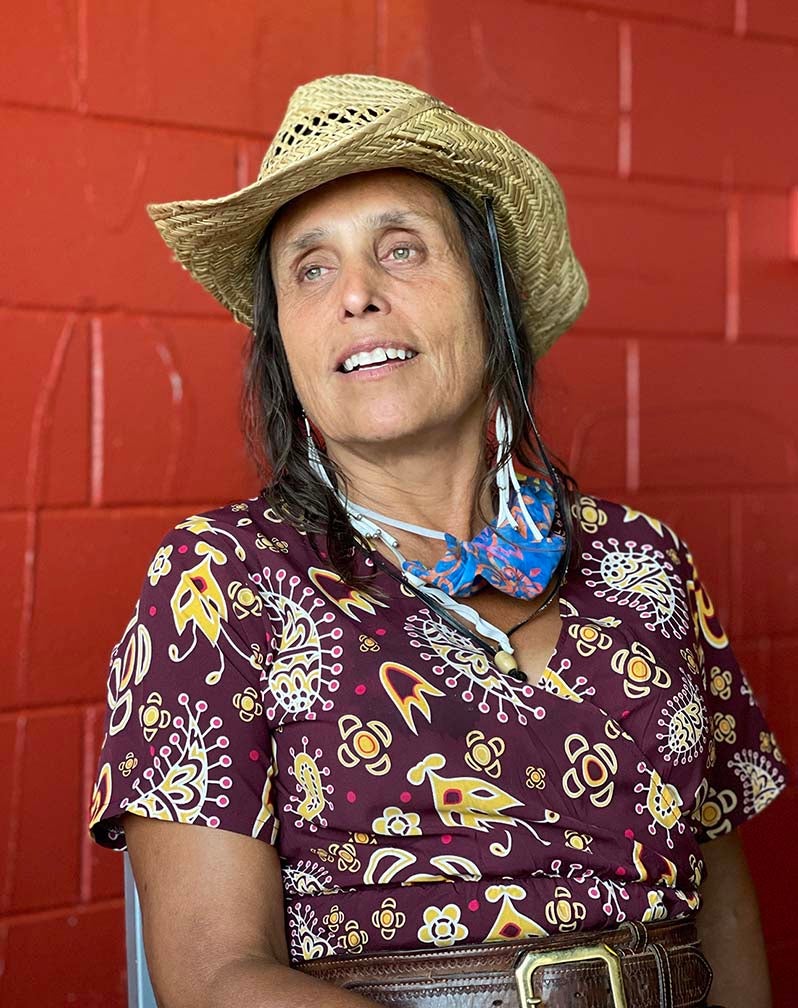
The University’s premier, free public lecture series will bring 10 experts to the Kingston Campus to examine numerous aspects of the local and global food systems on Tuesday evenings at 7 in Edwards Hall. The series starts Sept. 13 and ends Dec. 13. The colloquium will also be available online. In addition to the lectures, the art department will present an exhibit related to the themes of the colloquium titled “Some Food We Could Not Eat,” featuring the works of Kamari Carter, Jennie Maydew and Zoe Scruggs and the Rhode Island Food Policy Council will have a photo contest that will serve to illustrate the different elements of the Rhode Island food system.
Colloquium coordinators John Taylor, professor of plant sciences and specialist in agrobiology, and Marta Gomez-Chiarri, professor of fisheries and specialist in aquaculture, say in their proposal for the colloquium that in 1900, 40% of the U.S. population lived on farms, and 41% of the population was engaged in agricultural production. Today, roughly 80 percent of Americans live in cities, and less than 2% of the labor force works in agriculture.
Citing a 2017 survey of Americans older than 18, 48 percent of respondents reported seldom or never seeking out information about where or how their food was grown or produced.
“There is great interest in Rhode Island in terms of increasing food sovereignty, so in other words re-localizing the food system,” Taylor said. “It’s tied into the regional initiative, 50 by 60, whose goal is to produce 50 percent of the food in New England by 2060. Hand in hand with that comes our desire to make this re-localized production more sustainable and also more equitable in terms of people’s access to food.”
The initiative, “50 X 60: A New England Food Vision,” is a report issued by Food Solutions New England, a regional network coordinated by the University of New Hampshire.
“We involved many people in the development of this colloquium, and URI also has a new interdisciplinary program in sustainable agriculture and food systems,” Gomez-Chiarri said. “We are trying to bring attention to that program and its goals.”
“We are working with URI Dining Services and its director, Pierre St-Germain, because we feed our students, but they don’t know where their food comes from,” she added. “There are also issues of food security among students. So we are trying to increase our local food production from local farms, including those at URI. Most people don’t know about the farms at URI.”
“This is all part of the larger problem with the food system, and this was really underscored by the (COVID-19) pandemic, during which we saw breakdowns in the global supply chains,” Taylor said. “For the first time in my lifetime, I saw empty shelves at grocery stores.”
Taylor and Gomez-Chiarri said there is great enthusiasm across disciplines at URI and people interested in sustainable, local food production.
The colloquium course is focused on three major themes,
“We will cover the entire food system including production, processing, distribution, consumption, waste management and recovery,” Taylor said.
“Restaurants are a big part of that, and so we have two chefs coming to speak, and one of them, Sean Sherman, is founder and director of an organization called Sioux Chef (speaking Oct. 4),” Gomez-Chiarri said. “Our kickoff speaker Winona LaDuke, is also a Native American who is an expert on pre-Colonial food and food sovereignty among the native tribes.”
She also noted that Dawn Spears, representing the Narragansett Tribe, played an important role in helping organize the lecture series.
LaDuke, a Native American activist, economist, and author, starts the series Sept. 13, with her talk, “Restoring Indigenous Foodways in a Time of Climate Change–Lessons for the 8th Fire.” LaDuke’s presentation is “The Eleanor M. and Oscar M. Carlson Women’s Studies Lecture.”
LaDuke combines economic and environmental approaches in her efforts to create a thriving and sustainable community for her own White Earth reservation and Indigenous populations across the country. LaDuke is an Anishinaabekwe (Ojibwe) enrolled member of the Mississippi Band Anishinaabeg. LaDuke graduated from Harvard University in 1982 with a degree in rural economic development.
Today, the mother of six grown children (three biological and three adopted) devotes much of her time to farming. Located on the White Earth reservation in Minnesota, her farm grows heritage vegetables and hemp. LaDuke tries to publicize hemp’s environmental advantages: it requires less water to grow than cotton; can replace petroleum-based synthetics in clothing and other products; and absorbs carbon from the atmosphere, rather than releasing it. LaDuke’s Hemp & Heritage Farm is her latest endeavor; a farm and nonprofit agency, its mission is to create an Indigenous women-led economy based on local food, energy, and fiber, that is kind to the Earth.
The art exhibit, “Some Food We Could Not Eat”, featuring the works of Kamari Carter, Jennie Maydew and Zoe Scruggs will run from Oct. 15 through Dec. 13, with an opening reception Oct. 15 from 3 to 6 p.m., location to be determined. Curator for the exhibition is Rebecca Levitan, Main Gallery director and assistant teaching professor.
The other topics, speakers and dates are:

BELFAST — “The Boston Boats” is the topic for the Belfast Historical Society meeting Monday August 29, at 7 p.m., in the Abbott Room at the Belfast Free Library. Judith Frost Gillis, Orrington Historical Society president, will present a history of four of the steamships which plied the waters of Penobscot Bay and the Penobscot River providing rapid and safe transportation for both passengers and freight.
The steamships Belfast, Camden, Rockland and Bangor will be featured. The SS Belfast, known locally as The Boston Boat, served the Belfast to Boston route from 1909 to 1935. The presenter is hoping those in attendance will share their knowledge or recollections about any of the four steamships.
Visit the website BelfastMuseum.org and follow the Belfast Historical Society on Facebook to learn more about the program schedule. FMI info@belfastmuseum.org
Published: Published Date - 11:15 PM, Sun - 21 August 22

Hyderabad: This article is in continuation to the last article focusing on the ratio and proportion topic. Here are some practice questions along with solutions that will help you in your preparation for the State government recruitment tests.
Ram and Shyam were carrying some money such that their money was in the ratio 3:8. A friend gives each of them Rs 5 and their money is now in the ratio 2:5. Which is the smaller money of the two?
a. 45
b. 64
c. 105
d. 120
Ans: a
Solution:
Ratio of original money numbers = 3:8
Common factor helps in finding actual values easily
So, take ‘M’ as common factor.
∴ Original numbers will be 3M and 8M
Adding 5 to them, we get (3M 5) and (8M 5)
∴ 3M 5 / 8M 5 = 2/5 —————–>; (Ratio of new numbers is 2:5)
∴ 15M 25 = 16M 10
∴ M = 15
Smaller money value is 3M = 3 x 15 = 45
Q. A child has three different kinds of chocolates costing Rs 2, Rs 5, and Rs 10. He spends total Rs 120 on the chocolates. What is the minimum possible number of chocolates he can buy, if there must be at least one chocolate of each kind?
a. 22
b. 19
c. 17
d. 15
Ans: c
Solution:
The minimum number of chocolates is possible when he purchases maximum number of costliest chocolates.
Thus, 2 x 5 5 x 2 = Rs 20
Now, Rs 100 must be spend on 10 chocolates as 100 = 10 x 10.
Thus minimum number of chocolates = 5 2 10 = 17
Q. Vinod has Rs 20. He bought Rs 1, Rs 2, Rs 5 stamps. They are different in numbers by the reason of no change. The shop keeper gives 3 Rs 1 stamps, so how many stamps does Vinod have?
a. 10
b. 18
c. 12
d. 15
Ans: a
Solution:
Given total rupees = Rs 20
No. of Rs 1 stamps = 3
Now, remaining money = Rs 17
With that he buys only Rs 2 and Rs 5 rupee stamps
Let number of Rs 5 stamps = K
Let number of Rs 2 stamps = L
5K 2L = 17
K = 3, L = 1 (possible)
L = 6, K = 1 (possible)
=>; But given that they are different in number so, K is not equal to 3
Rs 1 stamps = 3
Rs 2 stamps = 6
Rs 5 stamps = 1
Total number of stamps = 10
Q. For any two numbers m, n; (m n): (m-n): mn = 7: 1: 60. Find the value of 1/m: 1/n.
a. 4:3
b. 8:7
c. 3:4
d. 7:8
Ans: c
Solution:
m nm − n = 7xx ⇒ mn = 4x3xm nm-n = 7xx ⇒ mn = 4x3x
Again, mn = 12 x 2mn = 12×2
and mn = 60x
so, 60x = 12×2 ⇒ x = 560x = 12×2 ⇒ x = 5
=>; m = 20 and n = 15
Hence, 1/m:1/n = 120:115 = 3:4
To be continued…
M. Venkat
Director
MVK Publications
Dilsukhnagar
7671002120
The fifth service of the FSB is considered to be the main culprit of the failure of the Russian invasion of Ukraine – it was this unit that was involved in the preparation of the Ukrainian “fifth column”, which had to support the “special military operation” at a crucial moment, and provided Putin with an analyst on the political situation in the country. In fact, it turned out that Ukraine was ready to resist, no one gave any support to the Russian invasion, and the huge funds allocated to the “fifth column” disappeared without a trace. The Fifth Service is headed by General Sergey Beseda, and what’s with him now — it’s unclear, I hear, he got into trouble and even became a figurehead in the criminal case, but formally he still ranks as the head of the service. Therefore, it is known that he earns more than it could be explained by legal income: as The Insider found out, the Besedy family has secreted real estate worth hundreds of millions of rubles, which it could not afford on an official salary.
Neither Sergey Beseda himself, nor members of his family (he has two sons) have ever excelled in business. However, all of them, as The Insider found out, provided expensive accommodation. The general himself, judging by archival data found by The Insider, had a 173-meter-long apartment in Bolshom Sergievskoye lane. The market value of this object is more than 100 million rubles, information about it has been removed from Rosreestra.
The younger son, 40-year-old Alexey, is fond of music and plays records in Moscow clubs. He known as «Alexei Bess» aka Ranking Cat. This is how they present themselves in the announcement of one of the speakers: «Vinyl collector and selector. Gets into reggae and Jamaican culture with a young age. Having heard dub mixes for the first time, King Tubby understood that this music carries a powerful cultural message and the right vibe».

In general, the general’s son tried to engage in business, he was a co-founder of Vending Initiative LLC, which installed coffee and snack machines, but the company closed in 2018, leaving behind fines and several lost claims for non-payment to suppliers. Before that, Alexey Beseda worked in Togliatti OJSC “Avtovazagregat”, but in 2016 the company was declared bankrupt, around then he returned to his homeland in Moscow. “Avtovazagregat”, whose board member was Besedy’s son, went bankrupt with a scandal: the management was sued for salary debts and tax evasion.
Alexey’s entire previous career was also not brilliant: until 2014, he managed the IT Invest company (now working under the ITI Capital brand), in 2015 he registered the consulting company Photon-Ik, but the company did not bring much money, in 2020 last year the revenue amounted to only 1.5 million rubles, and last year JSC was liquidated. At the same time, Alexey Beseda received a salary at OOO “New Investment Group”, about 300 thousand rubles per month.
It follows from the leakage of food delivery services that the son of the general orders food at the address in house No. 23 in Bolshom Predtechensky Lane, from Rosreestra information about his apartment has been removed along with the cadastral number. The market value of the 87-meter apartment is about 30 million rubles (wife Alexey, Anastasia Gulina, has no official income at all). Also, the Alexey family owns 4.3 hectares of land in the very elite village of Akulinino, where at one time Navalny’s command discovered Vladimir Yakunin’s palace with a “fur store”. Even without taking into account the two luxurious mansions of the general’s son, it costs about 100 million rubles.

It is worth reminding that Alexey Beseda was behind an offshore company that owned the Russian enterprise “Photoelectronic Devices”, which undertook to set up the production of matrices for the thermal imager used in armored troops and military aviation. An enterprise received hundreds of millions of rubles from the budget, but the project failed. The company’s board of directors included Roman Rogozin, the nephew of the ex-prime minister Dmitry Rogozin, who oversaw the military industry and lobbied the interests of Besedy’s offshore business.
Besedy’s eldest son, Alexander, is also connected to Rogozin, he worked in Rosoboronexport, the government apparatus (in the post of Deputy Head of the Secretariat of Deputy Prime Minister Dmitry Rogozin), and then moved to Roskosmos after Rogozin and became the head of the apparatus. He worked at Roscosmos until 2020. The total income of the son of the general for four years of work in the government (2016-17) and “Roscosmose” (2018-19) amounted to 36 million rubles. His wife Tatiana Beseda works in a leasing company with an annual salary of less than 3 million rubles. But his apartments are also more expensive due to leakage of the total official earnings: on Chasovoy Street (10 million rubles), on Vasilievskaya (25 million) and Profsoyuznoy (60 million), and all apartments are also removed from the Russian Register.
Thus, the market value of housing connected with the family of the FSB general, the data about which was removed from Rosreestra, is no less than 350 million rubles. Besedy’s 69-year-old wife retired. The incomes of the security forces themselves are not disclosed, but it is known that FSB leaders, even at the level of deputy director, earn about 6 million rubles a year
Published: Published Date - 11:50 PM, Fri - 19 August 22
Hyderabad: This article is in continuation to the last article focusing on the ratio and proportion topic. Here are some practice questions along with solutions on the ratio and proportion topic that will help you in your preparation for the State government recruitment jobs.
A bag contains 50 P, 25 P and 10 P coins in the ratio 5: 9: 4, amounting to Rs 206. Find the number of coins of each type respectively.
a. 360, 160, 200
b. 160, 360, 200
c. 200, 360,160
d. 200,160,300
Ans: c
Solution:
Let ratio be x
Hence no. of coins be 5x, 9x, 4x respectively
Now given total amount = Rs 206
=>; (.50) (5x) (.25) (9x) (.10) (4x) = 206
We get x = 40
=>; No. of 50p coins = 200
=>; No. of 25p coins = 360
=>; No. of 10p coins = 160
The compounded ratio of (2: 3), (6: 11) and (11:2) is
a. 1:2
b. 2:1
c. 11:24
d. 36:121
Ans: b
Solution:
Compounded ratio: When we compound two or more ratios with each other through product or multiplication, the result is simply a compound ratio.
Thus, the product of two or more ratios; i.e, ab:cd is a ratio compounded of the simple ratios a:c and b:d.
Required compounded ratio = (2/3 x 6/11 x 11/2) = 2/1.
A dog takes 3 leaps for every 5 leaps of a hare. If one leap of the dog is equal to 3 leaps of the hare, the ratio of the speed of the dog to that of the hare is:
a. 9:5
b. 2:3
c. 4:7
d. 5:6
Ans: a
Explanation:
Dog: Hare = (3*3) leaps of hare: 5 leaps of hare = 9:5.
The ratio of male and female in a city is 7:8 respectively and percentage of children among male and female is 25 and 20 respectively. If number of adult females are 1,56,800, what is the total population of the city?
a. 4,12,480
b. 3,67,500
c. 5,44,700
d. 2,98,948
Ans: b
Solution:
Let the total population be ‘p’
Given ratio of male and female in a city is 7:8
In that percentage of children among male and female is 25% and 20%
=>; Adults male and female % = 75% & 80%
But given adult females is = 1,56,800
=>; 80% (8p/15) = 1,56,800
=>; 80 x 8p/15 x 100 = 1,56,800
=>; p = 156800 x 15 x 100/80 x 8
=>; p = 367500
Therefore, the total population of the city = p = 367500
To be continued…
M. Venkat
Director
MVK Publications
Dilsukhnagar
7671002120

By WILL BRUMLEVE
will@fordcountychronicle.com
PAXTON — A meeting of the Paxton City Council’s economic development committee will be at 7 p.m. Wednesday, Aug. 24, at City Hall, 145 S. Market St., to discuss developing a plan for the revitalization of vacant and dilapidated buildings in the city’s tax-increment financing (TIF) district.
The TIF district comprises the Ottawa Road corridor and downtown area. Earlier this month, representatives of the Paxton Area Chamber of Commerce asked the city council to take swift legal action against downtown property owners who continue to neglect their storefronts and use them for noncommercial purposes, such as storage.
Alderman Kendall Cox, chairman of the economic development committee, requested a meeting of his committee be held to further discuss options to address the complaints and asked that Mayor Bill Ingold invite Anthony Schuering, the city’s TIF attorney, to attend.
Among the problem properties is a storefront in the 100 block of North Market Street that has remained vacant and been used for storage for years, drawing repeated complaints. While it has sat vacant, numerous buildings surrounding it have been improved inside and out, and Paxton’s downtown streetscape recently received a million-dollar makeover.
“My business is next door to one of the businesses that has been a topic of conversation for quite some time,” chamber representative and downtown business owner Dawn Stack told the council. “I had personal conversations (about the property) with Mayor Bill Ingold about three years ago, and I was assured that after a million dollars was put into our downtown, that would not be allowed to look like that, and it still does. I know there are other buildings on Main Street that have the same issue, so it’s really important to myself personally and as a chamber of commerce board member to see (the city) start enforcing those codes.”
The city already has plans to aggressively target a number of derelict residential properties for repair and cleanup, with the council recently approving the International Property Maintenance Code and the planned hiring of a code-enforcement officer to help with that effort. The officer, though, is not expected to do code enforcement on commercial properties, only residential. The officer has also not yet even been hired, as the city plans to first join the Central Illinois Land Bank Authority — something that cannot happen until September, when the land bank authority’s executive board meets to consider the city’s application for membership.
Even without a code enforcement officer, though, the city can still enforce its ordinances, Alderman Eric Evans said.
“I feel that we don’t need to wait to hire somebody,” Evans said. “We just need to move forward with it. … I think it’s time we take the gloves off and go into the ring.”
Nobody disputes Pele's greatness and his penchant for scoring. The exact number of goals in his career will forever be a topic for deba...


