Rechercher dans ce blog

Thursday, September 29, 2022

Housing a hot topic on campaign trail in Smithers – Smithers Interior News - Smithers Interior News

British Columbia is leading the country as the province with the highest rate of unaffordable homes, so it isn’t a surprise that housing is a hot topic on the municipal election campaign trail in Smithers.

Affordable housing is not just an issue unto itself, it has far-reaching impacts on most of the other big issues, economic growth, employment, healthcare, cost of living, public safety, homelessness and municipal taxation.

Sandra Hinchliffe, past president of the Northern Real Estate Board said the real estate market has slowed down considerably in Smithers and all over Canada.

“I have seen this type of slow down before, it’s part of the cycle, but in my 20 years as a Realtor, I hadn’t seen such a fast upswing,” she said.

“The housing shortage in Canada has been building for some time. Many experts in the field have been predicting an extreme shortage for a long time. And the fast upswing was the result. The cause of the hot market and the shortage is multi-faceted and there are many expert opinions to be found, but many say that all levels of government have not planned well enough for the future.”

She understands why housing has emerged as such an important election issue.

“It’s important to remember that while there is an important role for municipalities to play in facilitating the availability of housing, it’s also a broader issue that provincial and federal governments must tackle. More housing supply is the ultimate answer and all levels of government must work together to make sure the supply increases.”

She would like the new town council to work to facilitate the affordability of all levels of housing in Smithers.

Incumbent Mayor Gladys Atrill said the town needs to use smart incentives and regulations, work with the right partners and advocate to other levels of government. “Know we can’t do it alone.”

She added the other possible solution is to build up.

“A future consideration is to review the current height restriction on buildings. Going up is a smart way to increase housing using existing infrastructure like roads, water and sewer lines. We can consider putting multiple uses into one building, which could pave the way for more housing and needed amenities– like child care or the library.”

The only other person running for mayor is Murray Hawse and he thinks the answer to the problem is to get rid of some roadblocks that he thinks discourages and delays the process of planning, designing and building affordable housing and housing in general in this community.

“The barriers imposed by the town building processes can be discouraging and frustrating for all involved,” he said.

“Locally, this can begin to be addressed by forming a working group that includes local stakeholders, businesses, and interested parties to promote positive change and streamline the process. The outcome of this review will help shorten the duration from start to finish of projects in our community and, in turn, work to lessen the gap on availability of all types of housing available to the residents of our town.”

Nick Briere is running for a council position and also thinks less red tape will help alleviate the shortage. He said increasing the zoning area for carriage housing, allowing for laneway housing near the hospital and encouraging a greater variety of housing sizes and types to be built in Smithers to accommodate different households and incomes would help.

Fellow council candidate Laura Leonard agreed.

“Regulatory burdens add significantly more to the cost of housing,” she said. “If elected I would analyze our fee structure with regards to permitting to see if we can find ways to cut costs to the developer, reducing red-tape and encouraging investment in our community.”

Incumbent councillor John Buikema knows that housing is a complicated issue.

“There are many who think a municipal government has a major say over the cost of housing in its jurisdiction, but this is not the case,” he said. “The main reason for the high cost of housing in our town is that prices are market-driven. Smithers is a desirable place to live, and housing is more expensive in high-demand markets.”

Buikema added the current town council has tried to get involved in the area of housing in whatever way it can.

“We have supported a variety of housing stock in the Ambleside subdivision. We have opened ourselves to a potential Local Service Agreement on Alfred Avenue which could lead to a number of new houses being built there. We have encouraged small lot infill, skinny homes, carriage houses.

“We’ve made by-law changes making it easier to add secondary suites, and there have been property tax incentives for rental units added in the downtown core. Finally, we have provided a portion of the LB Warner site for the Dze L K’ant Housing Project.”

The only other incumbent councillor running is Frank Wray. He said the new town council will have some new zoning and incentive tools to explore, and, of course, should support any new housing initiatives that make sense for the community.

“Having been a councillor for the past 14 years, I can say that this is not an issue that will go away. There is no magic solution that will provide affordable homes for all immediately. Improvements have been incremental and will continue to come. Council must be prepared to work continuously on this issue for the foreseeable future.”

Sam Raven said while there has been progress in the last few years with carriage homes and approving higher density builds, Smithers needs to continue down that path working with all levels of government to encourage the construction of new units and affordable multi-family dwellings.

“I fully support exploring how we can utilize tiny homes into our neighbourhoods. Always ensuring that when we discuss suites and rentals that we have conditions in place to ensure that we are creating affordable, medium- to long-term rentals so our solutions will actually go towards solving the housing supply issues.”

First-time campaigner Calvin Elliot agreed the town needs to do more and he thinks more land must be developed to create more housing spaces.

“I think we are used to having single-family dwellings and in the past families were larger. Most homes today have four or less people. If we could change our thinking and use the land space more efficiently and create more multi-unit buildings, we could create more housing if land is limited,” he said.

Adam Koch agrees that high density is the way to go.

“We need high-density housing and we needed it yesterday,” he said. “We need housing for everyone, low-income, assisted living, seniors, small families, and professionals just trying to find a place so they can work here. I’m open to working towards any solution that is viable and possible, like offering incentives to developers so that they prioritize high-density housing over single-family homes.”

Jason McCrindle says the town is on the right track to help the housing stock.

“I feel that the Town of Smithers has taken many appropriate steps in the last few years to address the lack of housing, including the housings needs report in 2020, the Rental Housing Incentive Program and Dollars to the Door Program. These reports and programs have helped in recent years with getting more projects going.”

Meanwhile, Genevieve Paterson thinks a team approach to the situation will help.

“I will increase access to housing in Smithers by working with Indigenous, federal, and provincial governments, non-for profits and the private sector to ensure our Housing Incentive Policy and Community Plan are on track to meet our targets for infill developments, secondary suites, carriage houses and supportive housing,” she said.

BC Election 2022BC municipal electionSmithers

A new $13 million affordable housing project is slated for 1611 Main Street. (Marisca Bakker photo)

A new $13 million affordable housing project is slated for 1611 Main Street. (Marisca Bakker photo)

Adblock test (Why?)


Housing a hot topic on campaign trail in Smithers – Smithers Interior News - Smithers Interior News
Read More

Oct. 10: Managing business risk at Port of Seattle is topic of WSU Walton Lecture – WSU Insider - WSU News

Port of Seattle executives David Soike, chief operating officer, and Jeff Hollingsworth, director of risk management, will present “Planes, Ships, Cyber, and Internships — Managing Business Risk at the Port of Seattle” 5-6:15 p.m. Monday, Oct. 10, in the CUB Auditorium on the Washington State University Pullman campus. 

The presentation is the Carson College of Business’s 30th annual Walton Lecture, free to the public.

Soike (’80) has worked for the Port of Seattle since 1980 in different roles, beginning as a junior engineer in the engineering department and quickly advancing to positions in project management and work in the maritime and aviation divisions. He became COO in 2016 and is responsible for the centers of expertise for environmental sustainability and engineering, procurement, police and port construction services, along with executive sponsorship of the international arrivals facility and other functions. He has a strong background in strategic planning and has managed significant capital improvement projects at Seattle-Tacoma International Airport, where he also served as a senior operations manager, capital development leader and deputy director of aviation. He has experience in finance, planning, program management and marketing.

Hollingsworth has worked for the Port of Seattle since 2004. He leads the risk management department which provides support and expertise to all port divisions in the areas of loss prevention, contractual risk transfer, construction risk, claims management, enterprise risk management, self-funding of benefits and general risk financing. Prior to joining the port, he worked for the Federal Aviation Administration’s Northwest Regional Office on fire and life safety programs for new air traffic control towers. He also worked with the Boeing Corporation and as a loss prevention engineer with FM Global, a commercial property insurance company. Hollingsworth is a professional civil and fire protection engineer and holds several industry designations including certified safety professional, certified risk manager and chartered property and casualty underwriter.

The Port of Seattle is a special purpose government entity formed in 1911 under enabling legislation in the state of Washington and has the authority to run Seattle-Tacoma International Airport as well as various marine-related operations. In 2016, the Northwest Seaport Alliance was formed as a port development authority within the state, consisting of an equal partnership in management of assets and operations of the Port of Tacoma and Port of Seattle.

Each fall, the Walton Lecture brings a distinguished leader in insurance and risk management to campus to share professional perspectives. The lecture is hosted by the WSU Carson College of Business’s Department of Finance and Management Science and made possible through an endowment from the Independent Insurance Agents and Brokers of Washington. The endowment honors Max Walton, the group’s past president.

Adblock test (Why?)


Oct. 10: Managing business risk at Port of Seattle is topic of WSU Walton Lecture – WSU Insider - WSU News
Read More

Wednesday, September 28, 2022

The topic that caused Shania Twain, Oprah Winfrey convo to turn 'sour' - Page Six

Shania Twain learned never to talk about religion at the dinner table while out with Oprah Winfrey.

The country pop star, 57, shared on the podcast “Table Manners with Jessie Ware and Lennie Ware” on Wednesday that the divisive topic made her conversation with the media mogul, 68, turn “sour.”

“It was great to just sit and have real talks, but as soon as we started talking about religion, it all went sour,” Twain — who did not specify when the dinner took place — said, adding that she then told Winfrey, “Let’s stop talking about religion!'”

Oprah Winfrey and Shania Twain chatting.
Shania Twain said once she spoke of religion with Oprah Winfrey the conversation turned “sour.”
Amy Sussman

The “Man! I Feel Like a Woman” singer said there were clear differences between her and the former talk show host because Winfrey is “quite religious” and Twain considers herself more “spiritual.”

“I’m not religious in the sense that I’m dedicated to a religion,” she explained. “I’m much more of a spiritual person. I’m a seeker.”

A promo image for Shania Twain on the "Table Manners with Jessie Ware and Lennie Ware" podcast.
Twain talked about her dinner with Winfrey on the “Table Manners with Jessie Ware and Lennie Ware” podcast.

Despite their conflicting points of view, Twain said she was open to having a conversation but the topic just “wasn’t debatable” for Winfrey.

“There was no room for debate, and I like to debate,” the “From This Moment On” singer said. “Canadians like to debate everything. So, I’m like, ‘Oh, OK. It’s time to change the subject.'”

A rep for Winfrey did not immediately return Page Six’s request for comment on Twain’s claims.

In an interview with AARP Bulletin in 2015, the Oprah magazine founder, who grew up Baptist, opened up about her relationship with her faith and how she views those of different backgrounds.

Premiere Of Apple TV +'s "Sidney"
Winfrey is "quite religious," Twain, who considers herself more "spiritual," said.

Getty Images

15th Annual Academy Of Country Music Honors - Red Carpet
Winfrey is "quite religious," Twain, who considers herself more "spiritual," said.

Getty Images for ACM

Up Next

"I am over the stuff that happened [to me], but...

2

View Slideshow

“For me to live in a world that is not inclusive of other people who are not Christian would be the opposite of Christianity,” she said at the time. “I can’t define ‘God,’ so to be open to the mystical and mystery of God is a natural part of myself.

She added, “So people criticize me for not being what they are, and I say, it’s working for me and has worked for me and continues to work for me, in a way that fills me with a sense of peace and contentment about what God means to me.”

Although Winfrey and Twain had a bump in the road at that dinner, that did not stop the two women from working together.

The “You’re Still the One” singer has appeared on “The Oprah Winfrey Show” and she also starred on her own reality show on Winfrey’s OWN network called “Why Not? with Shania Twain.”

Adblock test (Why?)


The topic that caused Shania Twain, Oprah Winfrey convo to turn 'sour' - Page Six
Read More

False communication is talk topic - SUNY Cortland News

False communication is talk topic

09/27/2022 

A news media specialist from Syracuse University will explore why many false communications — including fake news, campaign lies and digital deepfakes — are protected as free speech under the U.S. Constitution, on Wednesday, Oct. 12, at SUNY Cortland.

 Nina Brown, an assistant professor in the university’s Newhouse School of Public Communications will present “False Speech and the First Amendment” at 4:30 p.m. in Moffett Center, Room 115.

Nina-Brown-2021.gif
Nina Brown, esq.

Brown’s lecture continues SUNY Cortland’s 2022-23 Rozanne M. Brooks Lecture Series on the theme of “The Culture of Truth.” Over the last decade, ‘truth’ has seemed to become a rare resource. This year’s series investigates why truth seems so fleeting in today’s world, but also where we might find it in the most surprising places.

The series’ talks and accompanying receptions are free and open to the public.

In her talk, Brown will discuss why the First Amendment often protects false speech, even when it causes harm.

Her talk, “False Speech and the First Amendment,” will explore what constitutes false, but protected, speech and whether current U.S. law can strike the right balance in preserving free speech rights.

“Even though they are false and often harmful, these types of speech are typically protected by the First Amendment,” Brown said. “Speech need not be true to receive protection under our laws.”

She  will explore whether that is the right framework and will examine the exceptions to rules on free speech.

“We will look at the impact of social media on false speech and at efforts to regulate both despite clear constitutional protections,” she said.

A faculty member at S.U. since 2015, Brown earned her law degree from Cornell Law School. There, she served as notes editor and associate editor of the Cornell International Law Journal and Moot Court Board member. She has a B.S. in advertising from the Newhouse School.

Brown teaches both undergraduate and graduate levels from freshmen through graduate and law students and has developed or co-developed courses, including a graduate Public Relations Law course and an online law course.

Her academic research has been cited in academic articles, creative publications, and the court system.

Editors of the 2020 Entertainment, Publishing and the Arts Handbook, an anthology published annually by Thomson Reuters (West), included and described her article in Va. J. L. & Tech., 1 (2020) on “Deepfakes and the Weaponization of Disinformation,” as “one of the best law review articles related to entertainment, publishing and/or the arts published within the last year.”

Brown was selected as a Fall 2019-2020 Kopenhaver Center Faculty Fellow and earned a 2018 Meredith Teaching Recognition Award from Syracuse University. The Newhouse graduating class of 2018 presented her with its Newhouse Award for Teaching Excellence.

She placed third in 2018 and 2017 for the AEJMC Law Division Teaching Award of the Association for Education in Journalism and Mass Communications.

The talks all take place on Wednesdays and begin at 4:30 p.m. in Moffett Center, Room 115. Seating will be limited and cannot be exceeded so attendees should  come early to secure a seat. A reception to welcome each speaker one half hour before the talk may be announced. Events in the series are subject to change.

The 2022-23 Brooks Lecture Series is sponsored by the Cortland College Foundation and Cortland Auxiliary.

For more information, contact Brooks lecture series organizer and Brooks Museum director Sharon Steadman, a SUNY distinguished professor and chair of SUNY Cortland’s Sociology/Anthropology Department, at 607-753-2308.


Adblock test (Why?)


False communication is talk topic - SUNY Cortland News
Read More

Tuesday, September 27, 2022

Affordable housing proves to be hot topic heading into municipal elections - renfrewtoday.ca

Affordable housing proves to be hot topic heading into municipal elections

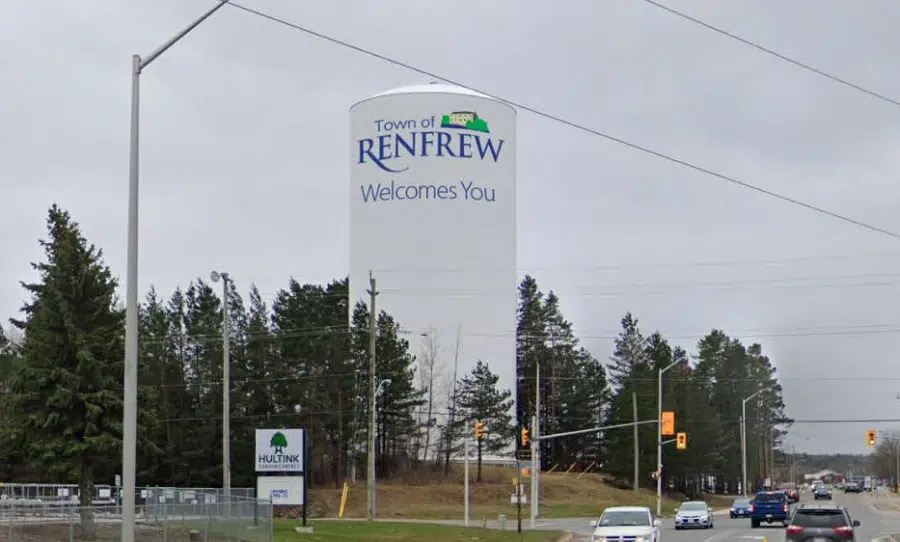
Photo Credit: Town of Renfrew

An Affordable Housing candidate forum in Madawaska Valley Township held Wednesday September 21st reinforced the role of small municipalities in working toward resolving the crisis.

The event was held at the Legion in Barry’s Bay, and attracted 50 interested residents and a dozen municipal candidates.

It was organized by the Affordable Housing Alliance of the Ottawa Valley (AHAOV).

Several people at the meeting talked about the “precarious position” that many tenants are in, with landlords seeking to replace current occupants so as to be able to jack the rent, or having to find accommodation in trailers or vehicles.

With municipal elections coming on October 24, much of the evening’s discussion was focused on the municipal role in tackling the crisis.

Meeting chair Ish Theilheimer emphasized the need for local committees to form to develop housing, pointing to Fairfields in Eganville and Millstream Apartments in Killaloe as examples of affordable housing started by local committees.

AHAOV plans to hold similar meetings in Pembroke (Sept. 27th), Killaloe, KHR Township, (Oct. 4th), Eganville, BV Township (Oct. 5th) and Golden Lake, NAW Township, (Oct. 6th).

(Written by: Rick Stow)

Adblock test (Why?)


Affordable housing proves to be hot topic heading into municipal elections - renfrewtoday.ca
Read More

War in Ukraine topic of Oct. 4 Oregon State Science Pub talk - Oregon State University

CORVALLIS, Ore. – Recent developments and future trajectories of the war in Ukraine will be the topic of Oregon State University’s Science Pub event at 6 p.m. Oct. 4.

The free event, which can be attended in person at the Old World Deli in Corvallis or viewed online, will feature a presentation by Sarah Henderson, an associate professor of political science in Oregon State’s School of Public Policy in the College of Liberal Arts.

Ukraine continues to defend itself more than seven months after the Russian invasion. Initially, many expected that Ukrainian President Volodymyr Zelenskyy’s government wouldn’t be able to withstand the Russian military for a week, Henderson notes.

On the other hand, in the ensuing weeks, many political experts also thought that Western sanctions would be sufficient to cripple the Russian economy, undercut support for Vladimir Putin and contribute to potential regime change in Russia, she said.

“Neither has come to pass,” she said. “And while Ukraine has more successfully ‘fought and thought’ its military campaign, Russia still wields potent weapons with its control of energy supplies and possession of nuclear weapons.”

During her Science Pub talk, Henderson plans to discuss some unexpected outcomes of the war for Ukraine, Russia, and the West, as well as future potential trajectories for this regional war with global implications.

Registration is required to attend Science Pub in person or to view it online.

Sponsors of Science Pub include the Oregon Museum of Science and Industry, Old World Deli and Oregon State University.

Adblock test (Why?)


War in Ukraine topic of Oct. 4 Oregon State Science Pub talk - Oregon State University
Read More

At Freedom House, these Black men saved lives. Paramedics are book topic - WJCT NEWS

PITTSBURGH, Pa. — John Moon stands on the 2000 block of Centre Avenue in Pittsburgh's Hill District. He's in front of a building that houses the Hill District Federal Credit Union, but he points to a plaque affixed to the stone façade commemorating the Freedom House ambulance service, widely acknowledged as the first paramedic program in the United States.

A half-century ago, Moon was a Freedom House paramedic, and he remains fiercely proud of it: The service, staffed overwhelmingly by Black men from the neighborhood, revolutionized emergency street medicine on the same blocks where many were underemployed, or even believed to be "unemployable."

"We were considered the least likely to succeed by society's standards," said Moon, who was 22 and a hospital orderly when he started training to join Freedom House. "But one problem I noticed is, no one told us that!"

Today, however, Moon worries that Freedom House is in danger of being forgotten – a victim not just of time, but of the deliberate erasure of its memory.

"Unfortunately, today there are probably people who live here that has never heard of Freedom House ambulance service," he said.

A new book could help.

Their story is committed to the page

"American Sirens" (Hachette Books), by Kevin Hazzard, tells the story of Freedom House, which operated from 1967-75, its historic accomplishments, and its unjust and untimely demise.

Moon, himself, plays a central role. He spent much of his childhood in an Atlanta orphanage before relatives living in the Hill adopted him. As an orderly at Oakland's Montefiore Hospital, he was astonished one night when two Black men entered with a patient on a stretcher, giving orders and clearly in command – a nearly unimaginable thing in those days. Moon learned they were from Freedom House, and he vowed to follow in their footsteps.

Cover of <em>American Sirens: The Incredible Story of the Black Men Who Became America's First Paramedics</em> by Kevin Hazzard.

/ Hachette Books

/

Hachette Books

Cover of American Sirens: The Incredible Story of the Black Men Who Became America's First Paramedics by Kevin Hazzard.

Hazzard sketches other key characters. One is Peter Safar, the storied Viennese-born anesthesiologist and Holocaust survivor who invented cardiopulmonary resuscitation, or CPR, in the 1950s, while working in Baltimore. Safar was also interested in emergency street medicine at a time when ambulances were driven by police, volunteer firefighters or even mortuary workers with little to no medical training. For victims of car crashes, heart attacks and gunshots, there was no on-site treatment, only an imperative to get them to the hospital as quickly as possible. Mortality rates were high. In the 1960s, working at Pittsburgh's Presbyterian Hospital, Safar developed a plan to do emergency street medicine, but he had no means to implement it.

Enter Philip Hallen, a former ambulance driver who was now president of the Maurice Falk Medical Fund, a local foundation. Hallen also saw the need for street medicine, especially in the Hill, which was medically underserved. He reached out to James McCoy Jr., a Hill-based entrepreneur who ran a job-training program called Freedom House Enterprises. After connecting with Safar, the men took the unusual step of recruiting their first class of "paramedics" – a job that, technically, did not yet exist – from the Hill itself.

"So, what you end up with was, you know, a number of guys maybe who were fresh back from Vietnam. A number of guys maybe who were fresh out of prison. A number of guys who were in-between jobs, because literally they're picking people up who they see kind of wandering the streets," said Hazzard, an Atlanta-based writer and former paramedic.

The rigorous training paid off, Hazzard writes: Serving just the Hill and Oakland at first, Freedom House saved lives that would have been lost before. Tour the Hill today with Moon, for instance, and stops will include the site of his first call for a heroin overdose, as well as the story of how he became, he believes, the first paramedic to intubate a patient in the field. The latter story involves another key figure in the book, Nancy Caroline, a doctor who in later years was Freedom House's medical director.

Doctors speak of Freedom House's success

"They were the first true paramedic program in the world," said Ronald Stewart, a Canadian expert in emergency medicine who was medical director for Pittsburgh's Public Safety department in the 1970s and '80s.

"It just amazes me, the quality of the program they were able to develop," said Jon Krohmer, a Michigan-based expert in emergency medicine and a board member of the National EMS Museum.

One intangible impact of Freedom House was the community pride it generated: Highly trained technicians – dozens of them, over the years — were saving lives in their own neighborhood, which was often ignored by the rest of the city.

"Often times, when a person would call for assistance, they would say, 'Don't send the police, send Freedom House,' " said Moon.

The flip side: Hazzard recounts that some white patients refused treatment by Freedom House, even though their lives might have been at stake.

Freedom House defibrillator.

/ Heinz History Center

/

Heinz History Center

Freedom House defibrillator.

Freedom House operated under a city contract – meaning that for years, the Hill had better emergency care than the rest of the city, where ambulances were still driven by police. But, in fact, emergency medicine was in the midst of a revolution sparked in part by "Accidental Death and Disability: The Neglected Disease of Modern Society," a 1966 report by the National Academies of Sciences/National Research Council. In this atmosphere, Freedom House's influence spread nationally, too. Under a contract from the U.S. Department of Transportation, Freedom House director Dr. Caroline wrote the first national curricula on emergency street medicine.

Saving lives gets in the way

But despite such successes, in "American Sirens," Hazzard writes, a new Pittsburgh mayor, Pete Flaherty, began to withhold support from Freedom House. At least one issue was racism: The overwhelmingly white police force saw the work of the overwhelmingly Black paramedics as an incursion onto their turf.

"There are many within Freedom House who eventually came to the conclusion that, you know, the problems that we're having with City Hall are not what we're doing, but rather who's doing it," said Hazzard.

Headshot of author Kevin Hazzard.

/ Hachette Books

/

Hachette Books

Headshot of author Kevin Hazzard.

Funding cuts were followed, in 1975, by the absorption of Freedom House into a new citywide EMS department. Many Freedom House paramedics stayed on, but most say they were treated poorly, their years of experience discounted. John Moon recalls being forced to "ride as the third person on a two-person crew."

"I endured a concerted effort to eliminate as many, if not all, of Freedom House employees as humanly possible, and it was very, very successful," he said.

But Moon himself persisted: In 2009, he retired as assistant chief of the department. These days, he is one of the main advocates for keeping the memory of Freedom House alive.

Savoring their memory

Public remembrances include the plaque on Centre Avenue (which was the headquarters of Jim McCoy's Freedom House Enterprises), and another on the site of UPMC Presbyterian, where the Freedom House ambulance service actually operated (though the original building is gone). Heinz History Center also houses a Freedom House display as part of its permanent exhibit "Pittsburgh: A Tradition of Innovation."

Moon hopes "American Sirens" helps spread the word. But in any case, Freedom House lives on in his heart.

"I owe Freedom House a debt that I don't think I will ever be able to repay," he said, "because they're the ones that instilled that motivation and that drive into me that I could do something no matter what it is, no matter what the hurdle, no matter what the barrier."

Copyright 2022 90.5 WESA

Adblock test (Why?)


At Freedom House, these Black men saved lives. Paramedics are book topic - WJCT NEWS
Read More

Monday, September 26, 2022

Hot Topics: Pat Surtain II doesn't allow a catch vs. 49ers, continues to showcase talent - DenverBroncos.com

ENGLEWOOD, Colo. — On six occasions on Sunday night, Jimmy Garoppolo looked in Pat Surtain II's direction.

And on six occasions on Sunday night, the 49ers' pass fell incomplete.

After a strong start to the season, Surtain took another step forward on "Sunday Night Football" as he didn't allow a completion against the San Francisco 49ers.

When Garoppolo targeted other areas of the field, he completed 18-of-23 passes for 211 yards and a 78.3 completion percentage, according to Next Gen Stats. Against Surtain, though, the 49ers didn't find any success.

And in the second half of Denver's defensive performance, the 49ers essentially stopped trying to test the second-year player; Surtain was targeted just once after halftime.

"I probably wouldn't throw his way, either," Head Coach Nathaniel Hackett said Monday. "First and foremost, as a person, this guy's special. I think that's what makes him such a great player up to this point. He's just going to continually get better. Just his natural athletic ability, his ability to not panic is huge. When you take this amazing athlete and then you take this guy who's so humble and a guy that wants to be coached and wants to be great, I think that's when you see him continually grow and get better."

Surtain's six targets without a reception are tied for the most without a catch since 2001, and he's allowed the fourth-lowest passer rating in the league since he was drafted, according to Next Gen Stats.

The second-year player allowed an average of just 1.5 yards of separation between himself and the targeted wide receiver — which was less than half the distance that 49ers receivers had on targets in which Surtain was not targeted.

"It's all about just confidence," Surtain said Monday of his success. "Stepping in and making plays and doing what's best for the defense. Coaches put me in the best position possible for me to have that game yesterday and play at the best of my abilities. It's just all around goes to the preparation, your film study, your confidence going throughout the game."

The 2021 ninth-overall pick's talent was most evident when he broke up a pair of first-half passes for Brandon Aiyuk — including one that got the Broncos off the field on third down — but the advanced numbers perhaps better illustrate Surtain's impact.

According to Pro Football Focus, Surtain has allowed just eight catches for 45 yards — an average of 5.6 yards per reception — while battling players like Seattle's DK Metcalf, Houston's Brandin Cooks and Aiyuk.

With a battle with Las Vegas' Davante Adams on deck, Surtain said he's embraced the challenge of facing an opponent's top receiver. Adams, a two-time first-team All-Pro, may be the biggest challenge after recording a touchdown in each of the first three games.

"I embrace it a lot, going against premier receivers like that week in and week out," Surtain said. "You just expect that, especially coming from our division. We're facing top receivers each and every week. You've just got to come out and do what you've got to do. Going against a receiver like [Adams] — a top receiver — it comes down to film study, your preparation throughout the week, and you can only control what you can control going forward. It's going to be a good battle, but looking forward to it."

So long as Surtain continues to match his current level of play, he should hold his own against any receiver he faces.

IMPROVING ON OFFENSE

The Broncos struggled at times on Sunday night, as the offense posted nine three-and-outs and did not reach the end zone until late in the fourth quarter.

But as Hackett explained Monday, Denver is still working to perfect its offense as quarterback Russell Wilson adapts to a new team and new system.

"I think, when you look at it ... Russell's been in one place for his whole career," Hackett said. "And then he comes here, he's got a new coaching staff, new city, new fans, new press, new system, new people that he's going out there and playing with. So it's not as easy as just going out there with anybody and playing ball. So I think we're all working through all kinds of things. I'm working through things with him on making sure I'm calling the proper plays for him, that the players are running the right routes. … Just that whole thing. Just everybody working together.

"There's been some good, and there's been some bad, and we've just got to make sure we have more good than bad as we continue to move forward."

Denver hasn't been without offensive success, as the Broncos have scored fourth-quarter go-ahead touchdowns in each of the last two weeks. As Hackett, Wilson and Co. move forward, though, it's clear there's room to improve.

Adblock test (Why?)


Hot Topics: Pat Surtain II doesn't allow a catch vs. 49ers, continues to showcase talent - DenverBroncos.com
Read More

PCL's CSR report addresses hot button topics of today - constructconnect.com - Daily Commercial News

Mass timber, embodied carbon, environmental, social and governance (ESG) endeavours — all of these “hot topics” recently made their way into PCL Construction’s 2021 Corporate Social Responsibility (CSR) report.

“It’s a report that is a living document that evolves each year,” said Scott Beckman, director of sustainability at PCL. “What we’re trying to do is to incorporate some of the best practices that we see in ESG reporting, so we’ve adopted that and included more metrics and things that are quantifiable in our approach and in our outcomes for all three of those categories this year.”

The report provides an update on the sustainability road map that includes reducing construction-related carbon emissions, building infrastructure with clean energy and leveraging renewable materials.

Some of the accomplishments cited in the report include 248 LEED-certified projects with a value of more than $18 billion; water and wastewater facilities that provide more than 20 billion gallons of treated water per day; more than $3 billion worth of renewable energy projects; more than $500 million worth of biofuel and biogas projects; and more than 3.2 gigawatts of solar projects.

The report also explores how to reduce PCL’s carbon footprint.

“We as a company have energy use and carbon emissions related to our offices and yards, our fleet vehicles and then also the ways in which we use energy on our jobsites. The report this year attempts to showcase how we are going about gathering that data and beginning to understand those impacts.”

Diversity, equity and inclusion efforts across the company were also included in the report.

In terms of sustainable practices, last year PCL completed its first iteration of the idle reduction campaign.

“That was an internal effort to encourage our staff to be conscious and conscientious of idling of our fleet trucks and vehicles while on jobsites and out doing work and trying to reduce the amount of unnecessary idling, thereby reducing fuel usage and costs and also carbon emissions,” said Beckman, adding other measures include using LED lighting on jobsites.

“We’ve also been transitioning our tools to electric and using battery generators where possible as opposed to gasoline or small diesel generators to reduce emissions. We continue to pilot solar jobsite trailers where feasible.”

One of the firm’s highest profile sustainable projects is the Ken Soble Tower at 500 MacNab, an 18-storey, 146-unit affordable seniors housing complex in Hamilton, Ont. The building, which was originally built in 1967, is the largest residential retrofit in the world to achieve certification under Passive House’s internationally recognized EnerPHit program for buildings that meet ultra-low energy standards.

“We have engineers on staff who can support the envelope detailing and engineering necessary on a project like that where we have to meet very strict air flow reduction requirements across the building envelope,” said Beckman. “That means being highly conscious of the details of the structure of the envelope, the materials, how the materials come together on the façade of the building to reduce unnecessary air infiltration to increase the energy efficiency.”

Embodied carbon has also become a hot topic in recent years, Beckman noted.

“As the building code and standards have increased and we now have buildings that can operate very energy efficiently during their operation lifecycle, now we’re starting to focus more on the embodied carbon related to the materials up front in the construction and processing,” he said.

“One thing that we’ve been putting a lot of emphasis on is low carbon concrete solutions…that involves some additional planning up front for us to understand the properties of the concrete mixes that are available in local and regional areas and how we can then apply them to meet the performance, cost and schedule criteria associated with a specific project.”

Mass timber also continues to gain attention both in Canada and the U.S.

“Owners are interested in mass timber for a number of reasons,” said Beckman. “The environmental story is certainly a big piece of that but also the esthetic qualities of mass timber design. For us it can also come with schedule benefits. We can often erect a mass timber project structure much more quickly than other alternatives but there are cost and schedule tradeoffs that come with that.”

For the full report visit Corporate Social Responsibility Report 2021 (pcl.com)

Follow the author on Twitter @DCN_Angela.

Adblock test (Why?)


PCL's CSR report addresses hot button topics of today - constructconnect.com - Daily Commercial News
Read More

Sunday, September 25, 2022

Thriving at All Ages: Taking action for suicide prevention is topic on September 27 - InMenlo

by Contributed Content on September 25, 2022

In honor of Suicide Prevention Month, the Menlo Park Library hosts a panel of guests who will share their personal experiences and stories of hope on Tuesday, September 27 from 6:00 to 7:30 pm. The panelists include suicide survivors who have graduated from the Lived Experience Academy speakers training program.

Adblock test (Why?)


Thriving at All Ages: Taking action for suicide prevention is topic on September 27 - InMenlo
Read More

Friday, September 23, 2022

Mental health topic of discussion between Indigenous front line workers, feds - APTN News

[unable to retrieve full-text content]

Mental health topic of discussion between Indigenous front line workers, feds  APTN News
Mental health topic of discussion between Indigenous front line workers, feds - APTN News
Read More

Why climate-change 'loss and damage' will be a hot topic at COP27 - ZAWYA

BARCELONA - As large parts of the planet struggle with climate-inflicted woes, from floods in Pakistan to forest fires in the United States, the thorny issue of how to address "loss and damage" driven by global warming has risen up the political agenda.

Nine years ago, U.N. climate negotiators agreed to set up a formal mechanism to tackle loss and damage - but little concrete has emerged, beyond a donor-backed effort to boost insurance against weather disasters in developing countries.

With frontline nations like small islands being hit harder, they - backed by climate activists - are pushing for funding and other help to prevent and deal with loss and damage from worsening floods, droughts, storms, heat and rising sea levels.

At September's United Nations General Assembly, U.N. Secretary-General Antonio Guterres waded into the debate with a controversial proposal for rich governments to tax "windfall" profits by fossil fuel companies.

The money, he proposed, should be redirected to countries suffering loss and damage caused by climate change, as well as to people struggling with rising food and energy prices.

Here's why loss and damage is set to be a hot topic at November's COP27 U.N. climate change conference in Egypt:

What is climate change loss and damage?

"Loss and damage" refers to the harm and destruction that happens when people and places are not prepared for climate-driven impacts, and have not or cannot adjust the way they live to protect themselves from longer-term shifts.

It can occur both from fast-moving weather disasters made stronger or more frequent by warming temperatures - such as floods or hurricanes - as well as from slower stresses like persistent drought and sea levels creeping higher.

A large share of "loss and damage" can be measured in financial terms, like the cost of lost homes and infrastructure.

But there are other "non-economic" losses that are harder to quantify, such as graveyards and family photos being washed away, or indigenous cultures that could disappear if a whole community must move because their land is no longer habitable.

A June 2022 report on 55 economies hit hard by climate change - from Bangladesh to Kenya to South Sudan - found they would have been 20% wealthier today had it not been for climate change and the $525 billion in losses inflicted on them by shifts in temperature and rainfall over the past two decades.

Often the poorest families, including some in richer societies, lack the means to recover what they have lost, particularly as aid flows fail to keep up with growing need.

What help is on offer when loss and damage happens?

Despite ever-louder calls for a global fund to compensate countries and communities for loss and damage, discussions on setting one up have proceeded at a glacial pace.

This is mainly because of fierce opposition from rich nations - including the United States, Australia and some European countries - that do not want to be held liable for their historically high greenhouse gas emissions or provide more climate finance.

Instead some donor governments have focused on expanding access to insurance in developing countries.

The InsurResilience partnership launched in 2017, for instance, aims to bring financial protection against climate and disaster risks to 500 million people, including small-scale farmers, by 2025.

But many climate campaigners say insurance cannot be a lasting answer, with losses expected to soar and perhaps become uninsurable as climate disasters intensify.

Funding needs for loss and damage are expected to run into hundreds of billions of dollars per year by 2030.

Humanitarian aid also is unlikely to provide sufficient help.

A 2022 study by anti-poverty charity Oxfam found that the amounts needed for humanitarian aid in response to weather disasters have skyrocketed in the last 20 years, increasing by more than eight times.

As demand grows, rich countries have met only just over half of the funding appealed for by the United Nations since 2017, leaving a huge shortfall, Oxfam said.

Humanitarian agencies fear the burden of dealing with growing loss and damage will fall on an already over-stretched international emergency response system that will be unable to cope with increasing demands on its limited resources.

So far, just the governments of Scotland, Denmark and the Wallonia region of Belgium have specifically committed cash to help with loss and damage, totalling only about $15 million.

Will a global loss and damage fund be set up soon?

A tough fight over the issue is expected at COP27 in Egypt between vulnerable nations and those who would be expected to step up and fill the coffers of such a fund.

Small island states and least-developed countries pushed for a facility to be established at COP26 in Glasgow in 2021 but did not succeed. Instead, a three-year dialogue on how to finance activities to tackle loss and damage was launched as a compromise.

The Glasgow summit did agree to fund the Santiago Network, a body to build technical expertise on dealing with loss and damage, such as helping countries consider how to move communities away from threatened shorelines.

Ahead of COP27, pressure is growing again for creation of a loss and damage fund at this year's U.N. climate conference - but it is not yet on the official agenda.

At the U.N. General Assembly in September, the Alliance of Small Island States (AOSIS) - countries among the most vulnerable to sea-level rise and other climate impacts - pushed hard for progress at COP27.

"Having talk shops on this until 2024, by way of the Glasgow Dialogue, does not serve our people who are experiencing loss right now," said Walton Webson, the AOSIS chair from Antigua and Barbuda.

He urged governments to commit to "strong support for loss and damage response finance" at COP27.

U.N. chief Guterres said it was "high time for a serious discussion and meaningful action" on loss and damage, adding he hoped COP27 would take it up "as a matter of climate justice, international solidarity and building trust".

The Climate Vulnerable Forum, a grouping of 55 countries from Asia, Africa and Latin America, have launched a #PaymentOverdue social media campaign to highlight the lack of internationally agreed financial support for communities suffering loss and damage, to promote the sharing of solutions and to raise funds for those worst-affected.

The V20 - a group of the Climate Vulnerable Forum's finance ministers - has also set up a small loss and damage fund to test how such a mechanism could help communities. The results are expected to be showcased at COP27.

Meanwhile, the U.N. chief's proposal to tax fossil fuel companies to help pay for loss and damage is likely to garner support, particularly as oil companies rake in record profits.

Other fundraising suggestions have included levies on airlines and financial transactions.

"It makes total sense for tax systems to build in a way for people to recover from the harm caused by the planet’s biggest polluters," said Teresa Anderson, global lead on climate justice for ActionAid International.

"The proposals being put forward at the U.N. General Assembly ... show that the funds can be found to help those on the frontlines of the climate crisis, and that there is no reason for rich countries to keep blocking progress," she added.

(Reporting by Megan Rowling; editing by Laurie Goering. Thomson Reuters Foundation)

Adblock test (Why?)


Why climate-change 'loss and damage' will be a hot topic at COP27 - ZAWYA
Read More

Thinking about your research topic: 5 ways to be inspired - Study International News

Coming up with a research topic is no easy feat. You want to write something impactful that you can bring forward in your career, but you don’t know how. 

The great news is that you’re not alone – most students struggle with this. That’s something Dr. Nikita Sandeep Wagle understands, so much so that she created an Instagram account (theinternationalphd) to help graduate students in their PhD journey. 

If you’re struggling to write your dissertation or thesis, consider practising these tips suggested by Wagle. Who knows? You might just stumble upon an idea for your next research topic: 

research topics

Once you have a good idea about your research topic, it’ll be easier for you to answer your research question and secure good grades for your dissertation or thesis. Source: Photo by Thomas Kienzle/AFP

Thinking about your research topic: 5 ways to be inspired

1. Review literature in your field of interest

Research Rabbit is a free software to start looking for literature in your field of interest. It incorporates artificial intelligence (AI) to scan information in public domains about what different papers are about, who cites them, and who they are cited by.

MediaWiki is another website that enables users to set up their own wikipedias. For graduate students, you can set up your own research group wiki or utilise wikis already established at universities, like Aalto University

As a Principal Scientist at the American Cancer Society, Wagle updates herself on the recent advances in her field by reading news related to the Affordable Care Act

2. Attend conferences

Even if you don’t have research to present, don’t be discouraged from attending conferences. Wagle advises that these events can help source research ideas and connect with experts in the field.

If your institution refuses to pay for your professional advancement, pay attention to free research conferences at your university. Some of these events are held virtually, so you won’t even need to leave your dorm to think of research topics.

Linkedin is a great alternative, too. Some faculty members share bits of their conversations on the platform. Try typing “#researchtopic” in the search bar and you will be able to filter through the relevant post.

3. Talk to your advisor

Dr. Aditi Paul, an Associate Professor at Pace University, offers similar advice too. Like Paul, Wagle found the chats with her advisor as an invaluable opportunity to shape her research questions. After all, they are experts in their field.

“In my first year of PhD at Bowling Green State University, I took a course on statistics for social science. Since it was my first time studying the topic, I would visit my professor during office hours every week,” Paul shares. “Here, I would ask for more clarification of my weekly assignments to ensure I was on the right track.”

research topics

Source: Brandon Bell/Getty Images North America/Getty Images/AFP

4. Chat with your seniors

Likewise, your peers are a great source of inspiration for your research topics and offer a different perspective on an idea or topic you have in mind — which is perfect for those who are intimidated at reaching out to advisors or professors at university.

“I was able to navigate my first and bounce off research ideas through my senior PhD student friends in my field across universities,” shares Wagle.

5. Participate in clubs and societies

Struggling to find like-minded people to bounce off research ideas? Consider joining a postgraduate society at university. Here, you’re more likely to interact with a senior who can advise you on how to tackle a challenging research question.

Alternatively, consider joining specialised clubs like journal clubs or lab meetings are another way to keep yourself updated about literature in your field of interest.

Adblock test (Why?)


Thinking about your research topic: 5 ways to be inspired - Study International News
Read More

Thursday, September 22, 2022

Humanists UK to host Steven Pinker on topic of new book, 'Rationality' - Humanists UK

World-renowned cognitive psychologist Professor Steven Pinker will speak for Humanists UK at a special event in London on Wednesday 12 October, to mark the publication of the paperback edition of this latest book Rationality: What It Is, Why It Seems Scarce, Why It Matters. Tickets are available to purchase now.

Those keen to attend are encouraged to book immediately. Early Bird tickets sold out this week within an hour, and previous Humanists UK events at which Pinker spoke sold out completely.

In this lecture, Steven Pinker will reject the cynical cliché that humans are simply an irrational species – cavemen out of time fatally cursed with biases, fallacies, and illusions. Instead, he will explain, we think in ways that suit the low-tech contexts in which we spend most of our lives, but fail to take advantage of the powerful tools of reasoning we have built up over millennia: logic, critical thinking, probability, causal inference, and decision-making under uncertainty.

Steven Pinker is an experimental psychologist who conducts research in visual cognition, psycholinguistics, and social relations. He has won numerous prizes for his research, his teaching, and his books, including The Language Instinct, How the Mind Works, The Blank Slate, The Better Angels of Our Nature, The Sense of Style, and Enlightenment Now.

Pinker is an elected member of the National Academy of Sciences, a two-time Pulitzer Prize finalist, a Humanist of the Year, a recipient of nine honorary doctorates, and one of Foreign Policy’s ‘World’s Top 100 Public Intellectuals’ and Time magazine’s ‘100 Most Influential People in the World Today’. He was Chair of the Usage Panel of the American Heritage Dictionary, and writes frequently for the New York Times, the Guardian, and other publications.

Notes:

For further comment or information, media should contact Humanists UK Director of Public Affairs and Policy Richy Thompson at press@humanists.uk or phone 020 7324 3072 or 07534 248 596.

Humanists UK is the national charity working on behalf of non-religious people. Powered by 100,000 members and supporters, we advance free thinking and promote humanism to create a tolerant society where rational thinking and kindness prevail. We provide ceremonies, pastoral care, education, and support services benefitting over a million people every year and our campaigns advance humanist thinking on ethical issues, human rights, and equal treatment for all.

Adblock test (Why?)


Humanists UK to host Steven Pinker on topic of new book, 'Rationality' - Humanists UK
Read More

Cobra Kai's Mary Mouser and Shameless' Ethan Cutkosky Celebrate Halloween with Hot Topic - TooFab

Adblock test (Why?)


Cobra Kai's Mary Mouser and Shameless' Ethan Cutkosky Celebrate Halloween with Hot Topic - TooFab
Read More

Wednesday, September 21, 2022

Why biobased products are a hot topic for today - Free Webinar - Agri-Pulse

or

9/30/22 11:00 am to 12:00 pm CDT

A new White House Executive Order is adding more momentum for biobased products on the 20th Anniversary of the USDA BioPreferred Program. The United Soybean Board (USB) has decades of experience in innovating with biobased products in partnership with manufacturers, such as Goodyear. USB is also introducing these products for sustainability strategies in cities, such as New York and Los Angeles, and communities across the nation. Hear how farmers, such as USB Director Belinda Burrier, are using the products on the farm as well as hosting city officials to see biobased in action. Speakers include:

- Belinda Burrier, director (MD), United Soybean Board
- Karen Edwards, founder, KCE Public Affairs Associates

Agri-Pulse Managing Editor Spencer Chase will serve as moderator for the event. The webinar is sponsored by the American Soybean Association and the United Soybean Board.

Register here.

Adblock test (Why?)


Why biobased products are a hot topic for today - Free Webinar - Agri-Pulse
Read More

Shelagh Rogers named 2022 Symons Medal recipient, lecture topic announced - SaltWire CB powered by Cape Breton Post

CHARLOTTETOWN, P.E.I. — One of Canada’s most esteemed broadcast journalists Shelagh Rogers will give her take on the state of Canadian Confederation on Oct. 13 as the recipient of the 2022 Symons Medal.

Earlier in 2022, the Confederation Centre of the Arts announced Rogers will be the 22nd recipient of the prestigious honour that recognizes those who have made an exceptional contribution to Canadian life.

Rogers is a veteran broadcast journalist at the CBC, most recently as the host and producer of The Next Chapter. Throughout her career, she has hosted other national radio programs like This Morning, The Arts Tonight and Sounds Like Canada.

In addition to her broadcast career, Rogers has also been recognized for her vocal advocacy for mental health care, adult literacy and promoting truth and reconciliation with Indigenous peoples.

Symons medal committee chair Robert Sear said Rogers has done a tremendous job of using her platform to share diverse stories.

“The combination of her knowledge of writing in Canada and personal experience with the Truth and Reconciliation Commission will make this Symons Medal Lecture essential listening.”

Held annually, the medal ceremony and its lecture offer a national platform for the medal recipient to discuss the nation’s current state, shared histories and prospects using themes related to their professional pursuits.

The title of this year’s lecture is Shut Up and Listen: Changing Our Story. Rogers will share lessons she has learned from others and her own experience as an honourary witness for the Truth and Reconciliation Commission.

The lecture will feel like one of Rogers’ famous radio programs, featuring soundbites from discussions with guests like authors Richard Wagamese and Chelsea Vowel, president and CEO of Inspire Mike Degagné and fellow medallist Murray Sinclair.

The Symons Medal lecture is named after Thomas H.B. Symons, the founding president of Trent University and a long-time board member and supporter of the Confederation Centre of the Arts.

Rogers will present her Symons Medal lecture at the Confederation Centre of the Arts in Charlottetown on Oct. 13 at 1 p.m.

The event will be livestreamed on the centre’s Facebook and YouTube channels.

A limited number of tickets were made available in May and all remaining tickets have been released. Confederation Centre Members can book tickets now and tickets will open to the general public on Sept. 22 and can be booked online or through the box office at 1-800-565-0278.

Adblock test (Why?)


Shelagh Rogers named 2022 Symons Medal recipient, lecture topic announced - SaltWire CB powered by Cape Breton Post
Read More

Trending Topics: Which team improved its roster the most this offseason? - NBA.com

The Sixers added some new, complimentary pieces around their core of Tyrese Maxey, Joel Embiid and James Harden.

As the 2022-23 season draws near, our writers will weigh in on some intriguing topics around the league.


Which team improved its roster the most this offseason?


Steve Aschburner: Boston. Malcolm Brogdon and Danilo Gallinari fill specific needs in the Celtics rotation with battle-tested veterans. That team has a talented enough core that plugging holes offers a major overall impact. To me, Minnesota adding Gobert and Cleveland picking up the other ex-Utahan, Donovan Mitchell, pose as many questions as answers. Brooklyn improved by not tearing itself down, but it will be a while before we know if the Nets’ minds are right.


Brian Martin: While we saw other teams acquire All-Stars via trade — Dejounte Murray to Atlanta, Rudy Gobert to Minnesota, Donovan Mitchell to Cleveland — Philadelphia retained an All-Star at a discount price in order to do some more shopping in free agency. James Harden’s new two-year deal (with a player option for next season) at below market value gave GM Daryl Morey and the 76ers the financial bandwidth to add some key players to complement the trio of Kia MVP runner-up Joel Embiid, former MVP Harden and rising star Tyrese Maxey. It’s a bit of a Rockets reunion with free agents P.J. Tucker and Danuel House from the Harden/Morey era in Houston. in the fold. Adding that duo along with De’Anthony Melton (from the Memphis Grizzlies) helps bolster the Sixers’ perimeter defense and 3-point shooting.


Mark Medina: The Cleveland Cavaliers improved their roster the most this offseason. After all, Cleveland landed a three-time All-Star guard still in his prime (Donovan Mitchell) from Utah. Of course, the Jazz extracted plenty from Cleveland, including young talent (Collin Sexton via sign-and-trade, Lauri Markkanen, Ochai Agbaji), unprotected first-round picks (2025, ’27, ’29) and pick swaps (’26, ’28). But the Cavs still retained most of their core group: last season’s Kia Rookie of the Year runner-up (Evan Mobley), an All-Star guard (Darius Garland), an All-Star center (Jarrett Allen) and a former All-Star that has adapted to a reserve role (Kevin Love). Cleveland has not climbed to the top of the Eastern Conference just yet as the Boston Celtics and Milwaukee Bucks have reserved that space. By acquiring Mitchell, though, Cleveland should jump to No. 6 after flaming out in the Play-In Tournament last season.

Cavs coach JB Bickerstaff has a new star to build around in former Jazz guard Donovan Mitchell.


Shaun Powell: The pick here would’ve been the Malcolm Brogdon-fused Boston Celtics had Danilo Gallinari not gotten hurt, or the Atlanta Hawks with Dejounte Murray, or maybe the Detroit Pistons and Houston Rockets, both flush with first-rounders. But when a three-time All-Star who’s still in prime his gets dealt to a team, then we have a winner. Donovan Mitchell puts the Cleveland Cavaliers, who were a Play-In team last season, firmly into the second group of Eastern Conference powers. On the surface, that doesn’t sound so glorious … until you understand that it’ll take more than that to make the Celtics, Milwaukee Bucks, Philadelphia 76ers, Miami Heat and Brooklyn Nets sweat. Maybe that happens two seasons from now, when the young core around Mitchell starts flexing more muscle.


John Schuhmann: Philadelphia. Rudy Gobert is clearly the most impactful player that changed teams, but the Sixers stacked their rotation with the additions of P.J. Tucker, De’Anthony Melton, Montrezl Harrell and Danuel House. Harrell is the only one who doesn’t provide shooting around the Sixers’ two stars, but he’s scored 1.33 points per possession as a roll man over the last five years and he can be a great pick-and-roll partner for James Harden (a roll he’s had before) when Joel Embiid goes to the bench. The Sixers’ success will ultimately come down to Harden’s ability to play like a star in the postseason, but this team is now incredibly deep and versatile, with the ability to rank in the top five on either end of the floor if Embiid stays relatively healthy.


Michael C. Wright: It’s tough to say. Cleveland solved its Collin Sexton dilemma by trading him and landing Donovan Mitchell to add to a young, talented core featuring Darius Garland, Jarrett Allen and Evan Mobley. The Cavs have a couple of Ferraris in the backcourt now and a couple of elite rim protectors. James Harden sacrificed some in Philly so that Daryl Morey could go out and add toughness in P.J. Tucker. The Sixers’ trade for De’Anthony Melton was low-key a shrewd move, too. As someone based in San Antonio that has watched Dejounte Murray essentially grow up over the years, his addition in Atlanta makes the Hawks the team that improved the most this offseason. Murray gives Atlanta a defensive presence on the perimeter, while allowing Trae Young to stay fresher during games playing off the ball. It’s as if Atlanta killed two birds with one stone by adding Murray (a defensive guard and secondary playmaker).


> Trending Topics: Impact of Wall, Beverley in Los Angeles?

Adblock test (Why?)


Trending Topics: Which team improved its roster the most this offseason? - NBA.com
Read More

Pele's goal count a topic of debate - CTV News

Nobody disputes Pele's greatness and his penchant for scoring. The exact number of goals in his career will forever be a topic for deba...